

Plant care guide
How to care for Frosty Fern
Selaginella kraussiana (often 'Variegatus' or 'Frosty')
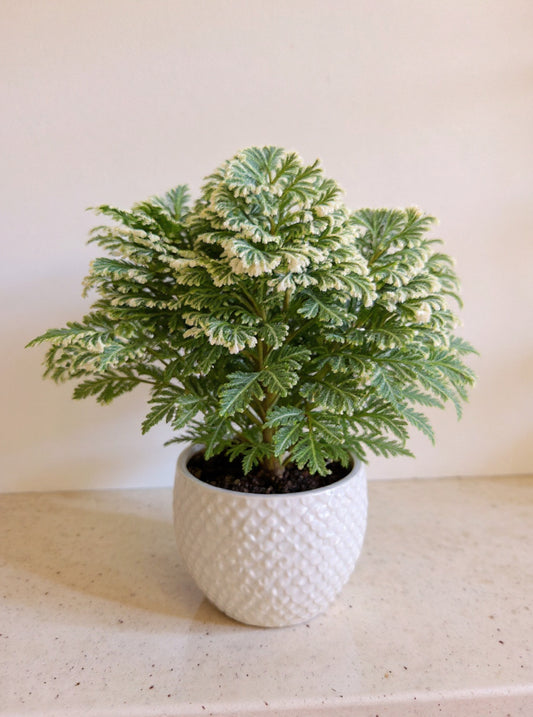
The frosty fern is not a true fern but a spikemoss, with soft, mossy green fronds tipped in creamy white as if dusted with snow. It is a popular holiday plant, and with plenty of humidity it can stay looking frosty and fresh well beyond the season.
Also known as: Frosty fern, spike moss, spikemoss, Krauss's spikemoss, club moss, Selaginella, Selaginella kraussiana
Just arrived? Your first week at home
- Unbox it right away; frosty ferns dry out and suffer in the box faster than most plants.
- Check the soil immediately and water if it feels anything less than moist; it should never fully dry out.
- Place it in bright, indirect light with no direct sun, such as near a north window or a few feet from an east window.
- Some browned tips from the trip are normal; snip them off with small scissors.
- Keep it away from heat vents, radiators, fireplaces, and cold drafts.
- Give it extra humidity right away with a cloche, terrarium, or humidifier, and do not repot for at least two weeks.
Every plant is covered by our 30-day plant health guarantee. If your plant arrived damaged or isn't doing well, email a few photos to support@rootandreachbotanicals.com and we'll help you troubleshoot or make it right.
Light
Bright to medium indirect light keeps the white tips showing, such as near a north window or a few feet back from an east window. Direct sun dries and burns it quickly. In low light the white tips fade and growth gets stretched.
Water
Keep the soil consistently moist at all times, checking every day or two and watering when the surface starts to feel less damp. Bottom watering, by setting the pot in a saucer of water for 15 minutes, keeps the shallow roots evenly moist. Crispy brown patches mean it dried out; a gray, slimy look at the base means it is sitting in water too long.
Humidity
This plant needs high humidity, 60 percent or more, which is why it thrives in terrariums. In open air, use a humidifier and group it with other plants. Dry winter air is its biggest enemy.
Temperature
Keep it between 60 and 75 F. It prefers cooler indoor temperatures rather than hot rooms, but avoid frost, cold drafts, and heat vents. Warm, dry air causes it to brown quickly.
Soil & repotting
Use a peat- or coir-based mix that holds moisture, with a little perlite for drainage. It has shallow roots, so a wide, shallow pot or terrarium works well. Repot in spring only if it has clearly outgrown its container.
Feeding
Feed sparingly with a balanced liquid fertilizer at quarter strength once a month in spring and summer. Do not feed in winter. Too much fertilizer can scorch it.
Troubleshooting common problems
- Brown, crispy patchesdry soil or low humidity; water more often and raise humidity, then trim the damaged bits.
- White tips turning greennormal as growth matures or if light is low; brighter indirect light helps new tips stay pale.
- Mushy, gray stemsoverwatering with poor drainage; let the excess water drain and avoid letting it sit in a saucer.
- Scorched patchesdirect sun; move it away from the window.
- Thinning, stretched growthtoo little light; move to a brighter spot.
Tips to help it thrive
- Frosty ferns are perfect for open or closed terrariums, where humidity stays high without effort.
- Take small stem cuttings and press them onto moist mix in a covered container; they root easily.
- The white tips are most pronounced in cooler weather, which is why it shines in winter.
Pet safety
Frosty Fern is listed as non-toxic to cats and dogs by the ASPCA. As with any houseplant, it's still best to discourage pets from chewing the leaves, which can cause a mild upset stomach.
Shop this plant
-
 Sold out
Frosty Fern (Selaginella kraussiana)
Regular price $55.95 USDRegular priceUnit price per
Questions about your plant? Email support@rootandreachbotanicals.com. A real person reads every message.
Browse all plant care guides · Shop pet-safe plants