

Plant care guide
How to care for Rabbit's Foot Fern
Davallia fejeensis
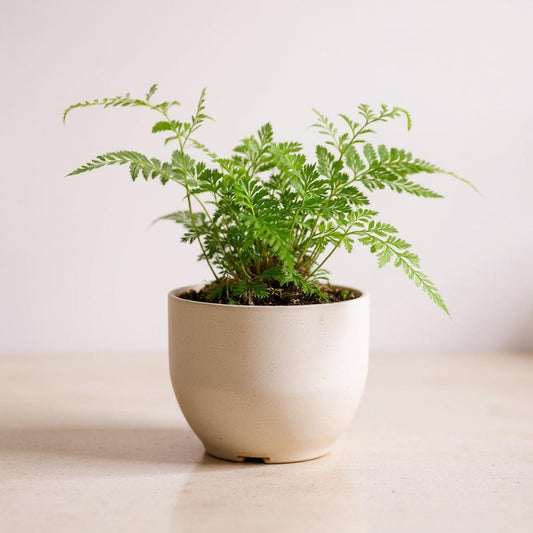
The rabbit's foot fern is known for its furry, tan rhizomes that creep over the edge of the pot like little paws, topped with lacy, finely cut fronds. It is a fun, quirky fern that is more forgiving than its delicate fronds suggest.
Also known as: Rabbit's foot fern, Davallia, Davallia fejeensis, squirrel's foot fern, deer's foot fern, hare's foot fern
Just arrived? Your first week at home
- Unbox it promptly and gently check the furry rhizomes; they are meant to sit on top of the soil and drape over the pot edge.
- Feel the soil; water if the top inch is dry, aiming the water at the soil, not the rhizomes.
- Place it in bright, indirect light, such as a few feet from an east window.
- Some dropped leaflets or a yellow frond after shipping is normal; trim any dead fronds at the base.
- Keep it away from heat vents and cold drafts.
- Wait about two weeks before repotting, and never bury the rhizomes when you do.
Every plant is covered by our 30-day plant health guarantee. If your plant arrived damaged or isn't doing well, email a few photos to support@rootandreachbotanicals.com and we'll help you troubleshoot or make it right.
Light
Bright to medium indirect light is ideal, like a spot a few feet from an east window or near a bright north window. Too little light leads to sparse fronds. Avoid hot direct sun, which scorches the fine foliage.
Water
Water when the top inch of soil feels dry, roughly once a week, and let the excess drain. Pour water onto the soil rather than over the rhizomes, which can rot if kept wet. Crispy, shedding fronds mean it is too dry; soft, mushy rhizomes mean too much water.
Humidity
It prefers moderate humidity of about 50 percent but copes with average homes better than many ferns. A pebble tray or humidifier helps in dry winter months. Lightly misting the rhizomes now and then is fine.
Temperature
Keep it between 60 and 75 F, away from frost, drafts, and heaters. It can handle brief drops to the mid 50s F, but cold stress causes frond drop.
Soil & repotting
Use a loose, airy mix such as potting soil with orchid bark and perlite. A shallow pot or hanging basket lets the rhizomes spread and drape. Repot in spring only when the rhizomes cover the surface, and keep them on top of the soil.
Feeding
Feed with a balanced liquid fertilizer at half strength once a month in spring and summer. Skip feeding in fall and winter. Overfeeding can burn the fine fronds.
Troubleshooting common problems
- Fronds drying and droppingdry soil, dry air, or cold drafts; keep watering consistent and add humidity.
- Mushy rhizomesoverwatering or buried rhizomes; let the soil dry more and keep rhizomes on the surface.
- Yellow frondsoverwatering or natural aging; check soil moisture and trim old growth.
- Sparse growthnot enough light; move to a brighter indirect spot.
- Scale or mealybugs on rhizomesdab with rubbing alcohol on a cotton swab.
Tips to help it thrive
- A hanging basket lets the furry rhizomes drape over the sides, which is half the charm.
- Propagate by cutting a rhizome piece with a frond or two and pinning it onto moist mix.
- It may shed some fronds in winter and flush new ones in spring; that is a normal seasonal rhythm.
Pet safety
Rabbit's Foot Fern is listed as non-toxic to cats and dogs by the ASPCA. As with any houseplant, it's still best to discourage pets from chewing the leaves, which can cause a mild upset stomach.
Shop this plant
-
Rabbit's Foot Fern (Davallia fejeensis)
Regular price From $40.95 USDRegular priceUnit price per
Questions about your plant? Email support@rootandreachbotanicals.com. A real person reads every message.
Browse all plant care guides · Shop pet-safe plants