Parlor Palm (Chamaedorea elegans): Complete Care Guide for Pet-Owning Households

Parlor Palm (Chamaedorea elegans): Complete Care Guide for Pet-Owning Households

At a Glance

Parlor Palm (Chamaedorea elegans) is one of the most reliably excellent houseplants available. It is ASPCA-verified non-toxic to cats and dogs, genuinely tolerant of low light conditions, a studied air-purifying species, slow-growing and manageable indoors, and forgiving of the imperfect care that most households provide. It is native to the rainforest floors of southern Mexico and Guatemala, where centuries of evolution under a dense canopy produced a palm that performs exceptionally well precisely where most plants struggle.

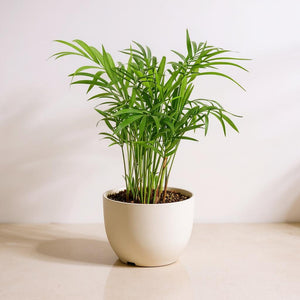
Parlor Palm Chamaedorea elegans - ASPCA-verified non-toxic houseplant for cats and dogs

Chamaedorea elegans, the Parlor Palm. ASPCA-verified non-toxic to cats and dogs.

The Parlor Palm has been a fixture of indoor plant collections since the Victorian era, when it was prized in the drawing rooms and parlors of European households for its graceful silhouette and exceptional tolerance of indoor conditions. More than 150 years later, it remains one of the most widely grown and recommended houseplants in the world, and for good reason. The traits that made it popular in 1870 are the same traits that make it invaluable today: it tolerates low light, tolerates imperfect watering, tolerates average household humidity, grows slowly enough to stay manageable, and brings genuine tropical elegance to any room it occupies.

For pet owners specifically, the Parlor Palm carries an additional advantage that cannot be replicated by its more dramatic tropical counterparts. It is ASPCA-verified non-toxic to both cats and dogs, making it one of the clearest answers to the question every pet-owning plant lover eventually asks: what statement plant can I actually keep in my home?

2-4ft Typical indoor height
Low Light requirement
7-14 Days between waterings
100% ASPCA verified non-toxic

What Is a Parlor Palm?

The Parlor Palm is the common name for Chamaedorea elegans, a species of small palm in the family Arecaceae native to the cloud forest and rainforest regions of southern Mexico and northern Guatemala. It grows natively at elevations between 1,000 and 2,000 meters, where cool temperatures, high humidity, and filtered light from the canopy above create growing conditions that translate almost directly into what you find in an average Northern Hemisphere home in winter.

In its native habitat, Chamaedorea elegans grows as an understory plant, meaning it lives beneath the canopy of much larger trees and receives very little direct sunlight. New fronds emerge from multiple clustered canes, giving mature specimens a full, bushy silhouette rather than the single-trunk profile of most large outdoor palms. Indoors, it grows as a multi-stemmed clump, typically producing several canes from the base and filling out over time into a dense, graceful column of arching, bright green fronds.

The plant is also known as the Neanthe Bella Palm, a trade name commonly used in nurseries for younger, smaller specimens. Parlor Palm and Neanthe Bella Palm are the same species. The name Parlor Palm originated in the Victorian era when the plant became a fashionable indoor plant in the parlors and drawing rooms of middle-class European households, where it thrived despite gas lighting, coal fires, and the dry interior air that killed most other tropical plants.

Chamaedorea elegans should not be confused with the Sago Palm (Cycas revoluta), which is not a true palm at all and is one of the most toxic plants available to cats and dogs. Always verify the scientific name before purchasing any palm for a pet household.

Is Parlor Palm Safe for Cats and Dogs?

ASPCA Verification

Chamaedorea elegans (Parlor Palm) is listed as non-toxic to both cats and dogs by the ASPCA Animal Poison Control Center. It is individually verified on both the ASPCA cat-safe and dog-safe plant databases and contains no known compounds that cause poisoning in either species.

The Parlor Palm is one of the clearest examples of why exact scientific name verification matters for pet-owning households. The word "palm" covers an enormous range of species across multiple plant families, and the toxicity status varies dramatically between them. The sago palm, which is commonly sold in garden centers and frequently featured in low-maintenance plant recommendations, is not a true palm at all. It is a cycad (Cycas revoluta) and is extremely toxic to both cats and dogs. Ingestion of even a small amount of sago palm can cause liver failure and is frequently fatal.

Chamaedorea elegans is a genuine member of the Arecaceae palm family and is confirmed non-toxic by the ASPCA. It has been individually cross-referenced against both the ASPCA cat-safe and dog-safe databases. At Root & Reach Botanicals, every Parlor Palm in our collection is verified by scientific name before entering our inventory, which is why it is available here without reservation for cat and dog households.

A Note on Sago Palm Confusion

Sago palms are one of the most toxic plants available to cats and dogs. They are frequently mislabeled in nurseries, sold in plant shops, and included in general plant care lists without adequate safety caveats. If you see a plant labeled "sago palm," "Cycas revoluta," or "cardboard palm," it should not be in a household with pets. Chamaedorea elegans (Parlor Palm) is a completely different and fully non-toxic species.

Why Parlor Palm Thrives in Low Light

The Parlor Palm's low light tolerance is not an adaptation or a compromise. It is a biological inheritance from millions of years of evolution on the forest floor. Chamaedorea elegans grew up in deep shade, and the biochemical machinery it developed to photosynthesize efficiently under a dense rainforest canopy is exactly what allows it to perform in the dim conditions of north-facing apartments, interior rooms, and spaces far from windows.

Most tropical plants that are labeled "low light tolerant" are really more accurately described as "low light survivable." They will stay alive but will not grow or maintain their best appearance. Parlor Palms belong to a smaller category of plants that genuinely perform well in low light, continuing to produce new fronds, maintaining their deep green color, and holding their form without the etiolation (stretching and reaching toward distant light) that affects most low-light plants over time.

What Low Light Actually Means for Parlor Palms

Low light, in houseplant terms, means bright enough to comfortably read without turning on a lamp during daylight hours. It does not mean no light. A Parlor Palm can handle positions that most houseplants cannot: six to ten feet from a window, in a room with a single north-facing window, behind sheer curtains, or in spaces that receive only diffused or reflected light rather than direct window light.

In these conditions, a Parlor Palm will grow slowly. New fronds will emerge once or twice a year rather than monthly. But the plant will remain healthy, hold its color, and maintain its shape indefinitely. This is categorically different from how most tropical plants respond to the same conditions, which is gradual decline and eventual death.

The ideal light condition for the fastest, healthiest growth is bright indirect light, the kind found in a well-lit room near a window but out of direct sunbeams. In bright indirect light, Parlor Palms will grow more vigorously and produce more frequent new fronds. They should never be placed in direct sun, which bleaches the fronds yellow and white and causes permanent leaf damage.

Parlor Palm Available at Root & Reach Botanicals

ASPCA-verified non-toxic. Available in 3, 4, 6, and 10 inch nursery pots. Every specimen shipped with our 30-Day Plant Health Guarantee.

Choosing the Right Size Parlor Palm

Parlor Palms are available at Root & Reach Botanicals in four nursery pot sizes, each representing a different stage of the plant's growth and suited to different placement and display goals.

3"
3 Inch Pot
Young specimen. Desk, windowsill, or terrarium. Grows into its space over 1 to 2 years.
4"
4 Inch Pot
Compact and established. Ideal for shelves, side tables, and grouped plant displays.
6"
6 Inch Pot
Mid-size and full. Table or plant stand height. Makes an immediate visual impact.
10"
10 Inch Pot
Established floor specimen. Statement plant presence in any room.

The 10 inch pot is the most frequently recommended size for pet-owning households looking for a statement plant that replaces a fiddle leaf fig, rubber plant, or other large toxic species. At 10 inches it arrives as a full, multi-stemmed specimen with immediate visual presence, and its slow growth rate means it stays at a manageable scale without requiring repotting or dramatic size management.

Complete Parlor Palm Care Guide

01 Light

Ideal: Bright indirect to low indirect light. 6 to 10 feet from a window is acceptable.

Tolerates: North-facing rooms, rooms with limited windows, positions away from natural light.

Avoid: Direct sun. Even a few hours of direct afternoon sun will bleach and permanently damage fronds.

02 Watering

Frequency: When the top 1 to 2 inches of soil feel dry. Approximately every 7 to 14 days in spring and summer, every 14 to 21 days in fall and winter.

Method: Water thoroughly until water drains from the bottom. Empty saucers after 30 minutes.

Avoid: Overwatering. Root rot is the most common cause of Parlor Palm death and is caused by soil that stays wet too long.

03 Humidity

Ideal: 40 to 60 percent relative humidity.

Tolerates: Average household humidity of 30 to 40 percent with minimal issues.

Signs of low humidity: Brown crispy tips on frond edges.

Solutions: Pebble tray with water, grouping with other plants, or a small humidifier. Misting is not recommended as it can encourage fungal spots.

04 Temperature

Ideal: 65 to 80 degrees Fahrenheit (18 to 27 degrees Celsius).

Minimum: 50 degrees Fahrenheit (10 degrees Celsius). Cold damage occurs below this threshold.

Avoid: Cold drafts near windows in winter, air conditioning vents blowing directly on the plant, and outdoor temperatures below 50 degrees Fahrenheit.

05 Soil

Ideal: Well-draining potting mix. A standard indoor potting mix amended with perlite (approximately 30 percent perlite by volume) works well.

Avoid: Heavy, dense potting mixes that retain moisture for extended periods.

pH: Slightly acidic to neutral, between 5.5 and 7.0.

06 Fertilizing

Frequency: Once a month during spring and summer only. Do not fertilize in fall or winter when growth is minimal.

Type: Balanced liquid fertilizer diluted to half strength. A fertilizer formulated for palms works well but is not required.

Avoid: Over-fertilizing. Excess fertilizer salts cause brown leaf tips and can damage roots. When in doubt, fertilize less rather than more.

Repotting Parlor Palms

One of the most common mistakes with Parlor Palms is repotting too frequently. Because they are slow-growing, they can remain in the same pot for two to three years before needing to move up a size. Repotting too early into a pot that is too large results in excess soil that holds moisture the plant cannot use, which creates conditions for root rot.

Repot when you can see roots emerging from drainage holes or circling visibly near the soil surface. Move up one pot size only, typically 2 inches larger in diameter than the current pot. Spring is the best time to repot, when the plant is entering its active growing season and can recover most quickly.

Parlor Palms do not like having their roots disturbed. When repotting, handle the root ball gently and avoid breaking up the existing root structure more than necessary. Water thoroughly after repotting and keep the plant out of direct sun for two to three weeks while it adjusts.

Pruning Parlor Palms

Parlor Palms require very little pruning. The only fronds that should be removed are those that are fully brown and dead, which can be cut at the base of the frond stem with clean, sharp scissors or pruning shears. Do not cut green or partially green fronds, as the plant continues to draw nutrients from fronds that still retain any green coloration.

It is normal for lower fronds to gradually turn yellow and brown as the plant grows. This is natural aging rather than a sign of care problems, provided new growth is continuing to emerge from the crown. A small number of yellowing lower fronds is not a cause for concern.

Do not cut the growing tip or crown of a Parlor Palm. Unlike some plants that branch after pruning, palms do not branch. Cutting the growing tip stops the plant's growth permanently and cannot be reversed.

Common Parlor Palm Problems and How to Fix Them

Symptom Most Likely Cause Solution
Yellow fronds throughout Overwatering or root rot Check soil moisture and drainage. Allow soil to dry more between waterings. If root rot is present, remove affected roots and repot in fresh, dry soil.
Brown crispy leaf tips Low humidity or underwatering Increase humidity with a pebble tray or humidifier. Check watering frequency. Brown tips cannot be reversed but will not spread if conditions improve.
Pale, bleached fronds Too much direct sun Move the plant away from direct sunlight. Pale bleached areas are permanent but new fronds will grow in the correct color once the plant is repositioned.
Brown fronds throughout Cold damage or cold draft Move away from cold windows, air conditioning vents, or exterior walls. Ensure temperatures stay above 50 degrees Fahrenheit.
Slow or no new growth Normal in low light or winter, or rootbound Parlor Palms grow slowly by nature. In low light or winter, very little growth is normal. Check if the plant is rootbound and needs repotting.
White or yellow speckles on fronds Spider mites Inspect the undersides of fronds for fine webbing. Treat with insecticidal soap or neem oil spray, applied to both upper and lower frond surfaces. Repeat every 5 to 7 days for three applications.
Sticky residue on fronds Scale insects Remove visible scale insects manually with a cotton swab dipped in rubbing alcohol. Follow with insecticidal soap treatment. Isolate from other plants during treatment.
Wilting despite moist soil Root rot from overwatering Remove plant from pot and inspect roots. Healthy roots are white to light tan. Brown, mushy roots indicate rot. Remove affected roots, allow to dry briefly, and repot in fresh well-draining soil.

Air Purifying Properties of the Parlor Palm

Chamaedorea elegans has been studied for its air-purifying properties and was included in research on the ability of houseplants to filter common indoor air pollutants including formaldehyde, benzene, and carbon monoxide. It is one of the most frequently cited houseplant air purifiers in botanical and environmental research literature.

Beyond filtering airborne compounds, Parlor Palms add moisture to indoor air through transpiration, the process by which water moves through the plant and evaporates from leaf surfaces. In heated winter homes where relative humidity can drop significantly, a large established Parlor Palm contributes meaningfully to indoor air moisture levels, which benefits respiratory comfort and can help reduce static electricity and the dryness that exacerbates skin and sinus issues during heating season.

Parlor Palms are also notable for being one of the few air-purifying plants that are ASPCA-verified non-toxic to cats and dogs. Many of the most widely cited air-purifying species, including pothos, snake plants, and peace lilies, are toxic to pets. The Parlor Palm provides both benefits without either risk.

Parlor Palm Compared to Other Popular Palms

Choosing the right palm for a pet household requires understanding how different palm species compare across toxicity status, light requirements, size, and care demands.

Parlor Palm vs. Areca Palm

Both the Parlor Palm (Chamaedorea elegans) and the Areca Palm (Dypsis lutescens) are ASPCA-verified non-toxic to cats and dogs and are among the best large houseplants available for pet households. The key differences are in light requirements and mature size.

The Areca Palm requires significantly more light than the Parlor Palm. It performs best in bright indirect light and does not tolerate the lower light conditions that Parlor Palms handle comfortably. In lower light, Areca Palms will decline. The Areca Palm also grows considerably larger than the Parlor Palm, potentially reaching 6 to 8 feet indoors in good conditions, making it better suited to large rooms with high ceilings and good natural light.

For rooms with limited light or for households that want a more manageable size, the Parlor Palm is the stronger choice. For bright rooms where a dramatic, tall specimen is the goal, the Areca Palm may be preferable.

Parlor Palm vs. Ponytail Palm

The Ponytail Palm (Beaucarnea recurvata) is also ASPCA-verified non-toxic to cats and dogs but is a very different plant in terms of care requirements and aesthetic. Despite its common name, the Ponytail Palm is not a true palm at all but a succulent-like tree in the family Asparagaceae.

The Ponytail Palm requires significantly more light than the Parlor Palm, preferring bright indirect to some direct morning sun. It is extremely drought tolerant due to its water-storing trunk base, which makes it better suited to irregular watering schedules. In terms of appearance, the Ponytail Palm's long, curling foliage and swollen trunk create a dramatically different aesthetic from the Parlor Palm's classic frond structure.

Parlor Palm vs. Sago Palm

This is not a comparison so much as a critical distinction. The Sago Palm (Cycas revoluta) is not a true palm and is one of the most toxic plants available to cats and dogs. All parts of the sago palm are toxic, the seeds especially so, and ingestion can cause liver failure and death. It should never be purchased for any household with pets regardless of placement. The Parlor Palm is in every way a safe alternative for households that want a palm aesthetic without the toxicity risk.


Why Parlor Palm Is an Exceptional Choice for Pet Households Specifically

Most of the large, dramatic houseplants that create visual impact in a room are toxic to pets. Fiddle leaf figs, rubber plants, monstera, philodendrons, and snake plants are all listed as toxic to cats or dogs or both by the ASPCA. This creates a particular frustration for pet owners who want a home that feels lush and planted without sacrificing the safety of their animals.

The Parlor Palm addresses this frustration directly. It is not a compromise or a consolation prize for pet owners who cannot have the plants they actually want. It is a genuinely excellent plant that happens to also be safe. Its graceful multi-stemmed silhouette fills vertical space elegantly. Its bright green fronds contrast beautifully against neutral walls. It performs well in exactly the kinds of rooms where pets spend most of their time, specifically lower-light interiors away from south-facing windows.

At 10 inches, a Parlor Palm is a fully realized statement plant that occupies a room the way a well-chosen piece of furniture does. It needs no special treatment, no grow lights, and no demanding care regime. It asks for consistent, moderate watering, some indirect light, and the occasional nutrient boost in summer. In return it offers years, often decades, of reliable presence in a household where it is fully safe for every living thing in it.

Shop Parlor Palm at Root & Reach Botanicals

Available in 3, 4, 6, and 10 inch nursery pots. ASPCA-verified non-toxic. Backed by our 30-Day Plant Health Guarantee.

Frequently Asked Questions About Parlor Palm

Is Parlor Palm toxic to cats?

No. Parlor Palm (Chamaedorea elegans) is listed as non-toxic to cats by the ASPCA Animal Poison Control Center. It is one of the most reliably safe palm species for cat households and poses no known toxicity risk if ingested.

Is Parlor Palm toxic to dogs?

No. Parlor Palm (Chamaedorea elegans) is listed as non-toxic to dogs by the ASPCA. It is fully safe for dog households and is one of the best large statement plants available for homes with dogs.

Can Parlor Palm grow in low light?

Yes. Parlor Palm is one of the most low-light tolerant palms available and genuinely performs well without direct sunlight. It is native to rainforest floors and is biologically adapted to lower light conditions. It will grow more slowly in lower light but will remain healthy indefinitely.

How often should I water a Parlor Palm?

Water when the top 1 to 2 inches of soil have dried out, approximately every 7 to 14 days during spring and summer and every 14 to 21 days in fall and winter. Overwatering is the most common problem and the most common cause of Parlor Palm decline.

What is the difference between Parlor Palm and Sago Palm?

Parlor Palm (Chamaedorea elegans) is a true palm, ASPCA-verified non-toxic to cats and dogs. Sago Palm (Cycas revoluta) is not a true palm. It is a cycad and is extremely toxic to both cats and dogs, with ingestion sometimes causing fatal liver failure. The two plants should never be confused in a pet household.

How big does Parlor Palm get indoors?

Parlor Palms typically reach 2 to 4 feet indoors under average household conditions. They are slow-growing and can take many years to approach their maximum indoor height, making them one of the most manageable large houseplants available.

Is Parlor Palm the same as Neanthe Bella Palm?

Yes. Parlor Palm and Neanthe Bella Palm are both names for Chamaedorea elegans. Neanthe Bella is a trade name used by nurseries, particularly for smaller specimens. Both are ASPCA-verified non-toxic to cats and dogs.

Why is my Parlor Palm turning yellow?

The most common cause of yellowing fronds is overwatering and root rot. Other causes include underwatering, direct sun exposure, overfertilization, or cold temperatures. A small number of yellowing lower fronds is normal as the plant ages and replaces old growth with new growth from the crown.

Does Parlor Palm clean the air?

Yes. Parlor Palm has been studied for its air-purifying properties, including its ability to filter formaldehyde, benzene, and carbon monoxide from indoor environments. It also adds moisture to indoor air through transpiration, which can benefit respiratory comfort in dry indoor environments.

What size Parlor Palm should I buy?

For a statement plant presence, the 10 inch nursery pot is the most recommended option. For shelves, side tables, or grouped plant displays, the 4 or 6 inch pot is ideal. The 3 inch pot is best for smaller spaces or for growing a young plant over time.

About This Guide
Written by Nikki, Founder and Pet-Safe Plant Specialist at Root & Reach Botanicals. All toxicity information is sourced from the ASPCA Animal Poison Control Center database. If you suspect your pet has ingested any plant, contact your veterinarian or the ASPCA Animal Poison Control Center at (888) 426-4435, available 24 hours a day. Browse the complete pet-safe palm collection or the full 150+ variety inventory at Root & Reach Botanicals.

Back to blog