

Plant care guide
How to care for Calathea
Calathea spp. (now often classified as Goeppertia), including C. lancifolia, C. lietzei, C. ornata, C. concinna, C. makoyana, C. roseopicta and C. elliptica
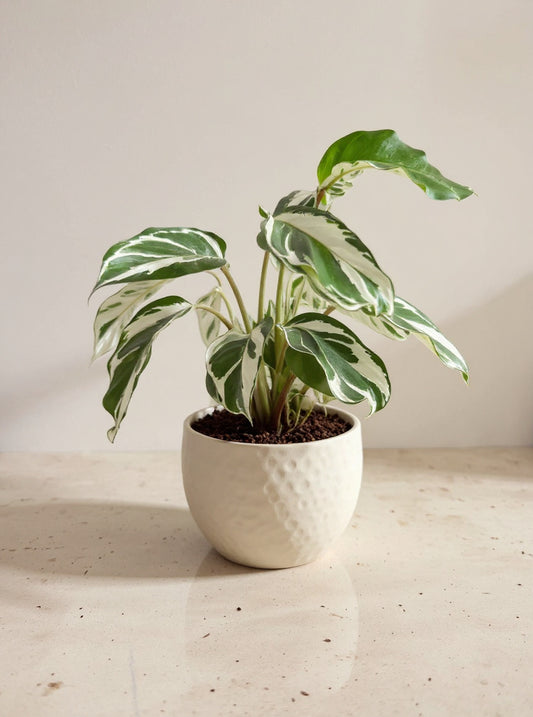
Calatheas are grown for their spectacular painted leaves, with stripes, feathering and deep purple undersides that look almost hand-drawn. They also fold their leaves up at night and open them in the morning, so your plant quietly moves through the day with you.
Also known as: Calathea, Goeppertia, Rattlesnake Plant, White Fusion Calathea, Beauty Star Calathea, Freddie Calathea, Peacock Plant, Cathedral Windows, Medallion Calathea, Silvia Calathea, Purple Rose Calathea, Rose Painted Calathea, Pinstripe Calathea, Dottie Calathea, Vittata Calathea, Green Goddess Calathea, Kennedy Calathea, Zebra Plant, Prayer Plant
Just arrived? Your first week at home
- Unbox it as soon as it arrives; calatheas dislike being in the dark and the cold for long.
- Place it in bright, indirect light away from direct sun, heat vents, radiators and drafty doors or windows.
- Check the soil: if the top inch is dry, water with room-temperature filtered, distilled or rain water; if it is still moist, wait.
- Curled leaves, a crispy edge or a yellow leaf or two are normal reactions to the trip; trim off any fully yellow leaves at the base and give it time.
- Don't repot for at least 2 to 3 weeks; calatheas sulk after being disturbed.
- Start adding humidity now, such as setting it near other plants or a humidifier.
Every plant is covered by our 30-day plant health guarantee. If your plant arrived damaged or isn't doing well, email a few photos to support@rootandreachbotanicals.com and we'll help you troubleshoot or make it right.
Light
Give calatheas medium to bright indirect light, like a few feet from an east window or across the room from a bright south or west window. Direct sun fades the patterns and burns the leaves. They tolerate lower light better than many plants, but colors are richest with steady, filtered brightness. A bright bathroom or kitchen with a frosted window is often ideal.
Water
Keep the soil lightly and evenly moist, never soggy and never bone-dry. Water when the top inch feels dry, which is often every 5 to 7 days in summer and a bit less in winter. Calatheas are sensitive to fluoride, chlorine and salts in tap water, so filtered, distilled or rain water helps prevent brown tips. Curling leaves mean it's thirsty; yellowing leaves and limp stems at the soil line usually mean too much water.
Humidity
Humidity is the big one: calatheas want 50 percent or higher. A small humidifier nearby makes the biggest difference, and grouping plants together or using a pebble tray helps too. Dry winter air from heating is the most common cause of crispy edges.
Temperature
Keep them warm, between about 65 and 80 degrees F. They are very sensitive to cold drafts and sudden swings, so keep them away from exterior doors, cold windowpanes in winter and air vents. Below 60 degrees F they may curl and get damaged.
Soil & repotting
Use a light, airy mix that holds moisture but drains well, such as indoor potting mix with peat or coco coir plus perlite. Repot every 1 to 2 years in spring into a pot just one size bigger with a drainage hole. Disturb the roots as little as possible.
Feeding
Feed every 4 weeks in spring and summer with a balanced liquid fertilizer at half strength. Calatheas are light feeders, and too much fertilizer causes brown tips. Skip feeding in fall and winter.
Troubleshooting common problems
- Crispy brown leaf edges or tipslow humidity or tap-water minerals. Use filtered water and add a humidifier or group plants.
- Leaves curling inwardthirst, low humidity or cold. Check the soil, raise humidity and move it away from drafts.
- Yellow leavesusually overwatering or soggy soil; occasionally an old leaf retiring. Let the top inch dry before watering again.
- Faded or washed-out patternstoo much direct sun. Move it to filtered light.
- Fine webbing or speckled leavesspider mites, which love dry air. Rinse the leaves in the shower, wipe the undersides and treat with insecticidal soap.
- Drooping, limp stems at the baseroot rot from wet soil. Check the roots and repot into fresh mix if they are mushy.
Tips to help it thrive
- Divide a large, crowded calathea in spring by gently separating clumps with their own roots and leaves; they don't grow from cuttings.
- Wipe dust off the leaves with a soft damp cloth so the patterns shine; skip leaf-shine products.
- Watching the leaves rise at night and lower in the morning is a good sign your plant is healthy and settled.
- Expect a slower season in winter; keep it warm and humid and it will push fresh leaves again in spring.
Pet safety
Calathea is listed as non-toxic to cats and dogs by the ASPCA. As with any houseplant, it's still best to discourage pets from chewing the leaves, which can cause a mild upset stomach.
Shop the plants in this guide
-
Rattlesnake Plant (Calathea lancifolia)
Regular price From $39.95 USDRegular priceUnit price per -
White Fusion Calathea (Calathea lietzei)
Regular price From $42.95 USDRegular priceUnit price per -
Beauty Star Calathea (Calathea ornata)
Regular price From $44.95 USDRegular priceUnit price per -
Freddie Calathea (Calathea concinna)
Regular price From $44.95 USDRegular priceUnit price per -
Peacock Plant (Calathea makoyana)
Regular price From $39.95 USDRegular priceUnit price per -
Medallion Calathea (Calathea roseopicta)
Regular price From $44.95 USDRegular priceUnit price per -
Silvia Calathea (Calathea roseopicta)
Regular price From $44.95 USDRegular priceUnit price per -
Purple Rose Calathea (Calathea roseopicta)
Regular price From $39.95 USDRegular priceUnit price per



Questions about your plant? Email support@rootandreachbotanicals.com. A real person reads every message.
Browse all plant care guides · Shop pet-safe plants