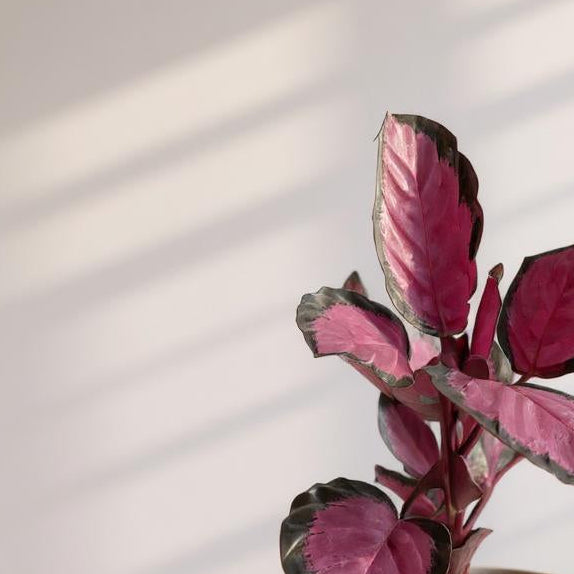


Calathea Purple Rose Prayer Plant - Pet Safe Non-Toxic Air Purifying Houseplant
Calathea Purple Rose Prayer Plant - Pet Safe Non-Toxic Air Purifying Houseplant
Couldn't load pickup availability
Calathea (Geoppertia) roseopicta "Purple Rose"
Also known as Purple Rose, Prayer Plant
About This Stunning Tropical Beauty
Native to the lush tropical regions of South and Central America, Africa, and the West Indies, the Calathea Purple Rose is a breathtaking specimen grown for its extraordinary foliage. This stunning variety showcases beautifully colored, upright oval leaves with vibrant patterns painted across the top surface and rich purple undersides that reveal themselves as the leaves gently fold upward each evening—a mesmerizing natural behavior that has earned all Calatheas their common name "Prayer Plants."
The Purple Rose variety features striking rose-pink patterns radiating from the center of each leaf, creating an almost painted appearance against deep green backgrounds. As a living work of art, this tropical treasure brings bold color and dynamic movement to any indoor space, with leaves that dance and shift position throughout the day in response to light changes—truly one of nature's most captivating houseplants.
Complete Care Guide
- Medium to bright, indirect light keeps leaf patterns vibrant and bold
- East or north-facing windows provide ideal gentle morning light
- Can tolerate lower light but colors may fade and growth will slow
- Direct sunlight will scorch and bleach the beautiful leaf patterns—always filter harsh rays
- Keep soil consistently moist but never soggy or waterlogged
- Water when top inch of soil feels dry to the touch
- Use filtered, distilled, or rainwater—Calatheas are sensitive to chemicals in tap water
- Allow room-temperature water to sit overnight if using tap to let chlorine evaporate
- Ensure excellent drainage to prevent root rot
- High humidity is essential: 60-80% mimics their tropical native habitat
- Temperature range: 65-80°F (18-27°C) with stable, warm conditions
- Use a humidifier, pebble tray, or group with other plants to boost moisture
- Mist leaves regularly with filtered water for extra humidity
- Brown, crispy leaf edges indicate humidity is too low
- Keep away from heating vents, air conditioners, and cold drafts
- Use well-draining potting mix that retains some moisture—peat-based or coco coir blends work beautifully
- Choose pots with drainage holes to prevent water accumulation
- Feed monthly during spring and summer with diluted balanced liquid fertilizer
- Reduce feeding to every 6-8 weeks in fall and winter during slower growth
- Repot every 1-2 years in spring when roots become crowded
- Wipe leaves gently with damp cloth to remove dust and keep patterns vibrant
- Trim brown or damaged leaf tips with clean scissors at an angle
- Remove entirely yellow or brown leaves at the base to encourage new growth
- Rotate plant weekly for even growth and balanced leaf display
- Watch for pests like spider mites which love dry conditions—maintain humidity to prevent
Styling Ideas for Your Calathea Purple Rose
Shipping & Potting Information

Frequently Asked Questions
Why do the leaves fold up at night? ▼
This fascinating behavior, called nyctinasty, is a natural circadian rhythm! Calatheas fold their leaves upward at night (resembling praying hands) and unfold them during the day to maximize light exposure. This movement is controlled by a small joint at the base of each leaf and is perfectly normal and healthy.
Why are the leaf edges turning brown? ▼
Brown, crispy edges are usually signs of low humidity or chemicals in tap water. Increase humidity with a humidifier or pebble tray, and switch to filtered, distilled, or rainwater for watering. This should resolve the issue within a few weeks as new growth emerges.
Are Calatheas difficult to care for? ▼
Calatheas have a reputation for being finicky, but they're quite manageable once you understand their tropical needs. The key is maintaining consistent moisture, high humidity, and warm temperatures. With the right environment, they'll reward you with stunning, ever-changing foliage.
Is this plant safe for pets? ▼
Yes! Calatheas are completely non-toxic to cats, dogs, and humans, making them an excellent choice for pet-friendly households. You can enjoy their bold beauty without any safety concerns for your furry family members.
Why are the colors fading on my Calathea? ▼
Fading colors typically indicate insufficient light. While Calatheas don't want direct sun, they do need bright, indirect light to maintain their vibrant patterns. Move your plant closer to a filtered light source and the new growth should show more intense coloration.