

Bird's Nest Fern Victoria Asplenium Nidus - Pet Safe Non-Toxic Wavy Frond Indoor Fern
Bird's Nest Fern Victoria Asplenium Nidus - Pet Safe Non-Toxic Wavy Frond Indoor Fern
Couldn't load pickup availability
Botanical Name: Asplenium nidus 'Victoria'
Common Names: Victoria Bird's Nest Fern • Wavy Bird's Nest Fern • Nest Fern • Crow's Nest Fern • Simple Leaf Fern
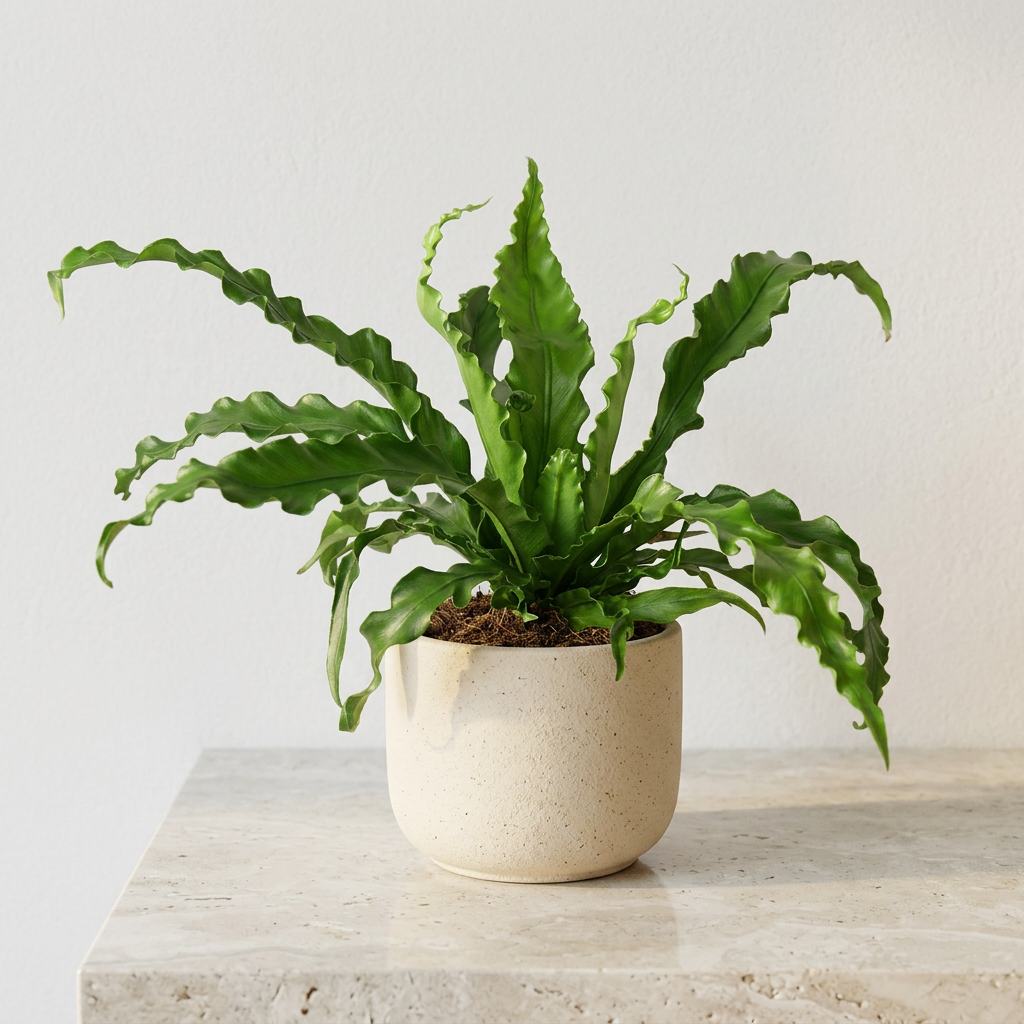
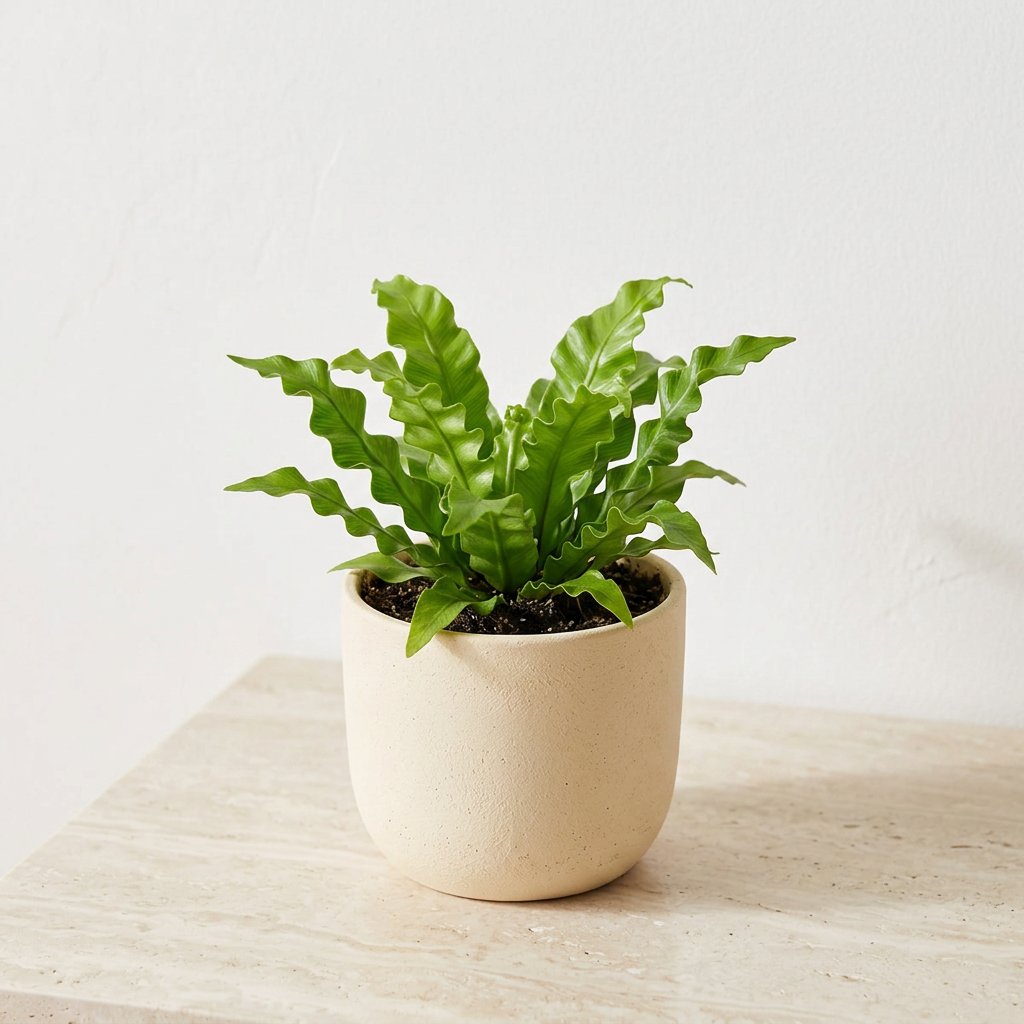
The Bird's Nest Fern 'Victoria' (Asplenium nidus) takes the familiar rosette and draws it out into something more graceful. Where the standard form spreads broad, paddle-like fronds, 'Victoria' produces long, narrow straps with deeply rippled edges that ripple and twist as they arch outward, each one rising from a dark central crown that really does look like a nest. New fronds emerge from that center tightly coiled, then unfurl slowly over weeks.
This is not a typical feathery fern. In the rainforests of Southeast Asia and the Pacific it grows as an epiphyte, wedged into the crooks of trees where it catches falling leaves and rainwater, which is why it tolerates lower light than almost anything else with foliage this dramatic. Asplenium ferns are listed by the ASPCA as non-toxic to cats and dogs, and the leathery fronds hold up better to a curious paw than the delicate foliage most ferns offer.
Complete Care Guide
- Medium to bright indirect light produces the fullest rosette and best frond color
- A north or east-facing window, or well back from a brighter window, is ideal
- Never direct sun, which scorches and bleaches the fronds quickly
- Genuinely tolerates lower light, making it one of the best ferns for a dim room
- Water the soil around the base, never into the central nest, as trapped water causes crown rot
- Keep the soil lightly and evenly moist, watering when the top inch feels dry
- Never let the root ball dry out completely, and never leave the pot sitting in water
- Use filtered or distilled water if your tap water is heavily treated
- Humidity of 60% or higher keeps frond edges from browning and crisping
- A bright bathroom is close to ideal, and a humidifier or pebble tray works elsewhere
- Temperature range: 65-80°F (18-27°C), never below 55°F (13°C)
- Keep away from heating vents, air conditioning, and cold drafts
- Use a loose, airy mix of peat or coco coir with orchid bark and perlite, reflecting its epiphytic roots
- Always choose a pot with drainage holes, and keep the crown sitting at soil level rather than buried
- Feed sparingly, monthly in spring and summer at quarter strength, since ferns burn easily on salts
- Repot every 2-3 years in spring, moving up only one pot size
- Do not touch the new fronds as they unfurl, since handling permanently marks and deforms them
- Trim old outer fronds at the base once they yellow, working from the outside in
- Wipe mature fronds gently with a soft damp cloth to remove dust
- Rotate the pot occasionally so the rosette fills out evenly on all sides
Styling Ideas for Your Victoria Fern
Shipping & Potting Information

Frequently Asked Questions
How is 'Victoria' different from a standard Bird's Nest Fern? ▼
'Victoria' produces noticeably narrower, strap-like fronds with wavy rippled margins, which gives it a finer and more upright silhouette. The standard Asplenium nidus grows broader, flatter, more paddle-shaped fronds. Care is identical between them, so the choice comes down entirely to the shape and movement you want.
Should I pour water into the center of the nest? ▼
No, and this is the mistake that kills more Bird's Nest Ferns than anything else. Water the soil around the base instead. Moisture that pools and sits in the central rosette leads to crown rot, and because new growth emerges from that exact spot, a rotted crown means the plant cannot recover. Keep the nest itself dry.
What are the brown lines on the undersides of the fronds? ▼
Those are sori, the spore-bearing structures every fern produces, arranged in neat rows running out from the central vein. They signal a mature, healthy plant and are very commonly mistaken for scale insects. The tell is the pattern: pests appear scattered and irregular, while sori are evenly spaced and symmetrical on both sides of the frond.
Can I divide it to make more plants? ▼
No. Unlike most ferns, which spread by rhizomes and can be pulled apart, Asplenium nidus grows as a single rosette from one central growing point. There is nothing to divide, and cutting into the crown kills the plant outright. It reproduces only by spores, a slow and specialized process, which is part of why quality specimens are worth holding onto.
Is this plant safe for pets? ▼
Yes! Asplenium ferns are listed by the ASPCA as non-toxic to cats and dogs. Worth knowing that many plants sold as ferns are not actually ferns at all, and some of those are toxic, so the botanical name matters when shopping elsewhere. The leathery strap fronds here are also sturdier than the feathery foliage of most ferns, which helps them survive a curious paw.