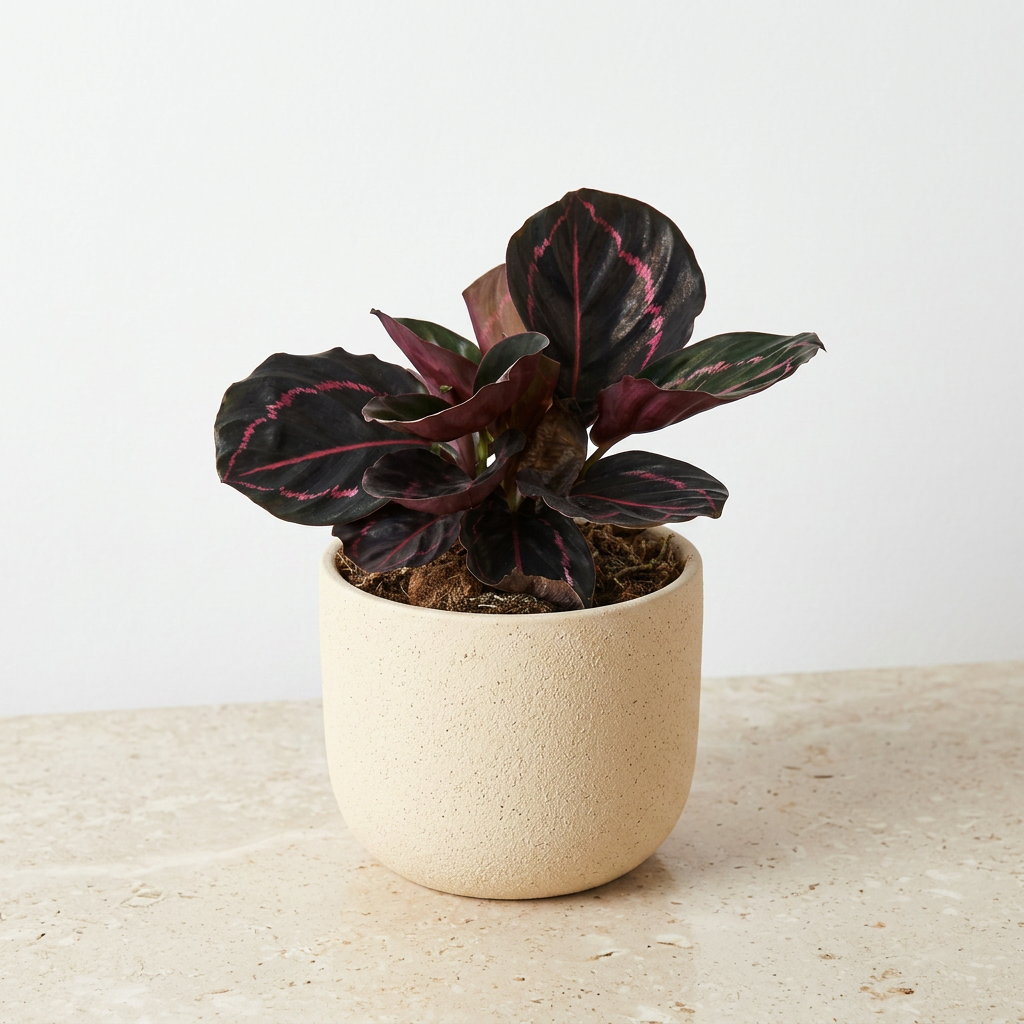


Calathea Dottie Calathea Roseopicta - Pet Safe Non-Toxic Dark Purple Pink Prayer Plant
Calathea Dottie Calathea Roseopicta - Pet Safe Non-Toxic Dark Purple Pink Prayer Plant
Couldn't load pickup availability
Botanical Name: Calathea roseopicta 'Dottie'
Common Names: Calathea Dottie • Rose Painted Calathea • Prayer Plant • Goeppertia roseopicta 'Dottie'
The Calathea 'Dottie' (Calathea roseopicta) is about as dramatic as foliage gets. Each broad, oval leaf is so deeply pigmented it reads almost black, then traced with a single bright magenta ring that follows the leaf edge and runs up the midrib like a brushstroke. Turn a leaf over and the underside is a rich burgundy purple. Set against paler plants, it looks less like a houseplant and more like something painted.
Dottie belongs to the prayer plant family, which means the leaves move on a daily rhythm, folding upward at dusk and opening again by morning. She asks for filtered water, steady humidity, and a spot out of direct sun, and she will tell you plainly when something is off. Calathea is listed by the ASPCA as non-toxic to cats and dogs, so this deeply moody, high-drama plant can sit at floor level in a house full of curious animals.
Complete Care Guide
- Medium to bright indirect light keeps the pink rings crisp and the dark tones rich
- A north or east-facing window, or well back from a bright window, works beautifully
- Never direct sun, which scorches the leaves and bleaches the color permanently
- Tolerates lower light better than most patterned plants, though the pink softens
- Use filtered, distilled, or rainwater, as tap water minerals cause brown crispy edges
- Keep the soil lightly and evenly moist, watering when the top inch feels dry
- Never let the root ball dry out completely, and never leave it sitting in water
- Reduce moderately in winter while keeping the soil from going fully dry
- Humidity of 60% or higher is the difference between flawless leaves and crisp edges
- Run a humidifier nearby, group with other plants, or use a pebble tray
- Temperature range: 65-80°F (18-27°C), never below 60°F (15°C)
- Keep away from heating vents, air conditioning, and drafty doorways
- Use a moisture-retentive but well-draining mix of peat or coco coir with perlite
- Always choose a pot with drainage holes to protect the shallow roots
- Feed monthly in spring and summer at quarter to half strength, as she burns easily
- Repot every 1-2 years in spring, dividing the clump if you want a second plant
- Leaf color shifts with the light, from near-black and pale pink to deep green and hot magenta
- New leaves unfurl a brighter pink and darken as they mature, which is normal
- Trim brown edges with clean scissors, following the natural curve of the leaf
- Wipe leaves gently with a soft damp cloth, and check undersides for spider mites in dry air
Styling Ideas for Your Calathea Dottie
Shipping & Potting Information

Frequently Asked Questions
Why does my Dottie look different from the photos? ▼
Leaves will change color under different lighting environments. In bright indirect light Dottie reads as deep green with vivid magenta rings, while in cooler or dimmer rooms the same leaves look near-black with softer, paler pink. New leaves also emerge a brighter pink and deepen as they mature. This is natural variation rather than a sign of a problem, and the color often shifts again once the plant settles into your home.
Why are the leaf edges turning brown and crispy? ▼
Crisp edges nearly always come down to water quality or humidity. Calatheas are unusually sensitive to the fluoride, chlorine, and dissolved salts in tap water, so switching to filtered, distilled, or collected rainwater solves most cases. Pair that with humidity around 60 percent and new growth will come in clean.
Why do the leaves move during the day? ▼
Calatheas belong to the prayer plant family and raise their leaves upward at night, then lower them again in the morning. The motion comes from a small hinge-like joint at the base of each leaf that responds to light. It is one of the most charming things about this plant and a good sign that yours is healthy and responsive.
Is this plant safe for pets? ▼
Yes! Calathea is listed by the ASPCA as non-toxic to cats and dogs, so Dottie is a safe choice for pet-loving households. Because she prefers indirect light and high humidity, she often ends up at floor level or on a low table, which makes that peace of mind especially worth having.
Should I cut off the brown tips? ▼
You can, and it does tidy the plant up. Trim with clean scissors, following the natural curve of the leaf and leaving a thin margin of brown rather than cutting into healthy green tissue. Address the underlying water or humidity issue first, though, or the new leaves will do exactly the same thing.