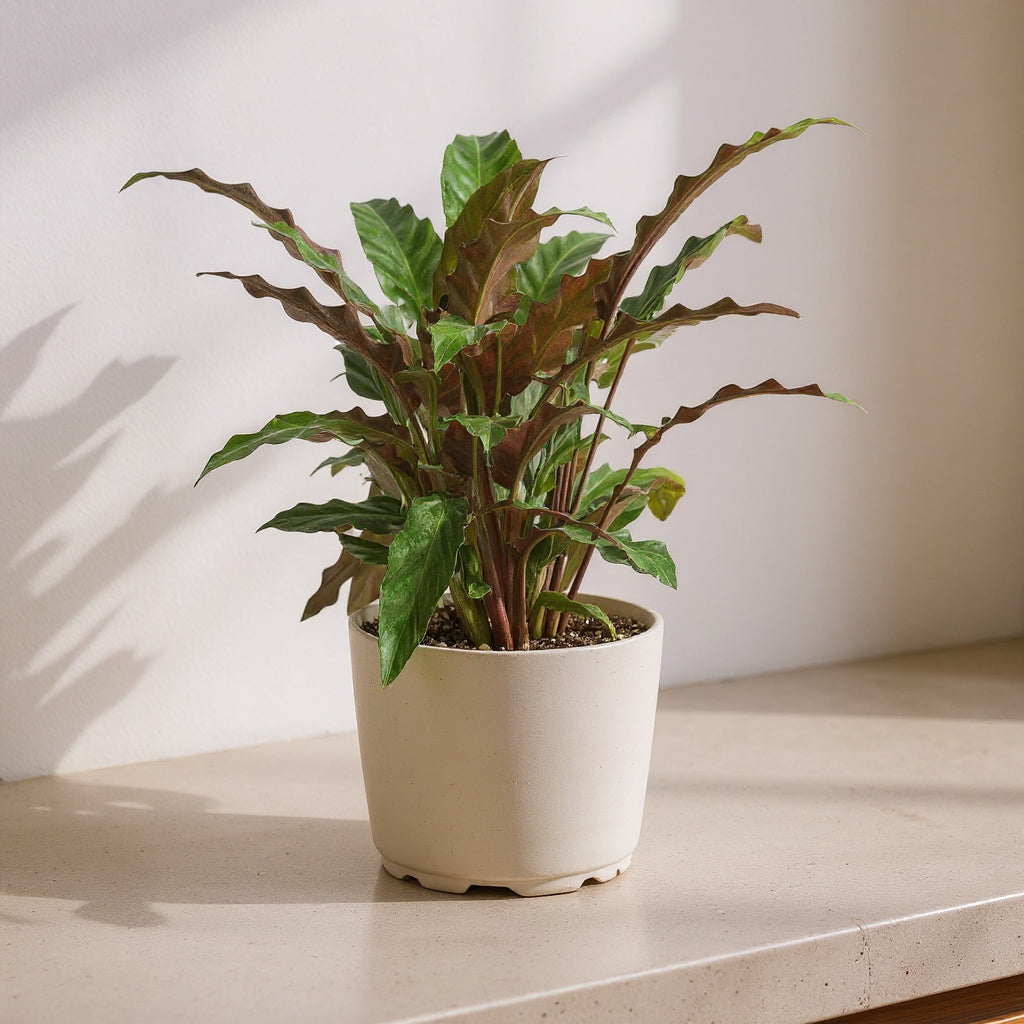
Calathea Rufibarba Furry Feather Velvet Calathea - Pet Safe Non-Toxic Houseplant
Couldn't load pickup availability
Botanical Name: Calathea rufibarba
Common Names: Furry Feather Calathea • Velvet Calathea • Peacock Plant • Zebra Plant • Furry Feather Prayer Plant
The Calathea rufibarba, known affectionately as the Furry Feather Calathea, is one of the most tactilely distinctive houseplants available, offering long, rippled, deep green leaves on the surface and a surprising soft burgundy fuzz beneath created by tiny hair-like structures called trichomes. Native to the tropical rainforest understory of Brazil and a member of the Marantaceae family, this living, breathing specimen gently shifts its leaves throughout the day in response to changing light, a behavior characteristic of all prayer plants that gives it an animated, calming presence in any indoor space.
Of all the Calathea varieties sought after by plant collectors, the Furry Feather stands out as one of the most forgiving for indoor conditions, tolerating lower light and brief dry spells far better than its more temperamental relatives, while still rewarding attentive care with vigorous growth and lush, velvety foliage year-round. Completely non-toxic to cats, dogs, and humans as confirmed by the ASPCA, this is a genuinely pet-safe tropical statement plant that brings warmth, texture, and quiet movement to homes, offices, and plant collections of any skill level.
Complete Care Guide
- Bright indirect light produces the most vibrant foliage color and active growth
- Tolerates medium and lower light better than most Calatheas, suitable for north-facing rooms
- East or north-facing windows provide consistently ideal growing conditions
- Keep away from direct sunlight, which can bleach the leaf surface and damage the delicate trichomes on the undersides
- Rotate the pot every few weeks to encourage even, balanced growth from all sides
- Water when the top 1 to 2 inches of soil feel slightly dry to the touch
- Keep soil consistently lightly moist but never soggy or waterlogged
- Use filtered water, distilled water, or tap water left to sit overnight - standard tap water contains chlorine and fluoride that can cause brown leaf edges over time
- Overwatering is the most common cause of decline; always ensure pots have drainage holes
- Reduce watering frequency during fall and winter when growth naturally slows
- Prefers humidity above 60%, though more forgiving of average household humidity than most Calathea varieties
- Ideal temperature range: 65 to 80 degrees F (18 to 27 degrees C) with consistent warmth
- Keep away from cold drafts, air conditioning vents, radiators, and exterior doors
- Boost humidity with a pebble tray filled with water, a nearby humidifier, or by grouping with other tropical plants
- Never expose to temperatures below 60 degrees F (15 degrees C), which can cause lasting leaf damage
- Use a rich, well-draining potting mix with added perlite or coarse sand for good aeration
- Shallow, wide containers suit this plant's relatively shallow root system better than deep pots
- Always choose a pot with drainage holes to prevent waterlogging at the roots
- Feed monthly during spring and summer with a balanced liquid fertilizer diluted to half strength; do not fertilize during fall and winter
- Repot every 1.5 to 2 years or when roots become crowded, using a pot only slightly larger than the previous one
- Propagate by root division during repotting in spring or early summer; this is the only reliable propagation method
- Calathea rufibarba cannot be propagated from stem or leaf cuttings in water; only division produces viable new plants
- Trim damaged, brown, or yellowing leaves at the base of the stem with clean scissors
- Avoid cutting near the crown of the plant, as this area is sensitive and slow to recover
- Wipe leaves gently with a damp cloth occasionally to remove dust and allow the plant to absorb light efficiently
Styling Ideas for Your Furry Feather Calathea
Shipping & Potting Information
Frequently Asked Questions
What makes the Furry Feather Calathea unique compared to other Calatheas? ▼
The defining feature of Calathea rufibarba is the soft, velvety texture on the undersides of its leaves, created by tiny hair-like structures called trichomes. Unlike most Calatheas that showcase bold patterning on the leaf surface, the Furry Feather's standout detail is tactile: a rich burgundy fuzz beneath smooth, rippled deep green foliage on top. It is also one of the more forgiving Calatheas for indoor growing, tolerating lower humidity and occasional missed waterings better than most varieties in the family.
Is this plant safe around pets and children? ▼
Yes. Calathea rufibarba is confirmed non-toxic to cats, dogs, and horses by the ASPCA, and poses no toxicity risk to humans. No part of the plant, including the leaves, stems, or roots, contains compounds known to cause serious harm to pets or family members, making it a genuinely worry-free choice for households with animals and children.
Why does my Furry Feather Calathea need filtered or rainwater? ▼
Calathea rufibarba is sensitive to the chlorine, fluoride, and mineral content found in standard tap water. Over time, these compounds accumulate in the soil and cause the leaf edges to turn brown and crispy. Using filtered water, distilled water, or tap water left to sit in an open container overnight allows most of these additives to dissipate before watering, keeping the foliage healthy and the edges clean.
How large will my Furry Feather Calathea grow indoors? ▼
Indoors, Calathea rufibarba typically reaches 2 to 3 feet tall with a spread of 1 to 2 feet. It is a moderate grower with most active growth occurring during spring and summer. Its upright, clumping habit and manageable size make it well suited for plant stands, shelves, tables, and desktop displays without overwhelming a space.
Why are my Furry Feather Calathea leaves curling or turning brown at the tips? ▼
Curling leaves are most commonly caused by cold drafts, dry air, or underwatering. Brown leaf tips are typically the result of low humidity or mineral-heavy tap water. Both issues are straightforward to address: move the plant away from air vents and drafts, increase ambient humidity using a pebble tray or humidifier, and switch to filtered or overnight-rested tap water for all future waterings.
Share