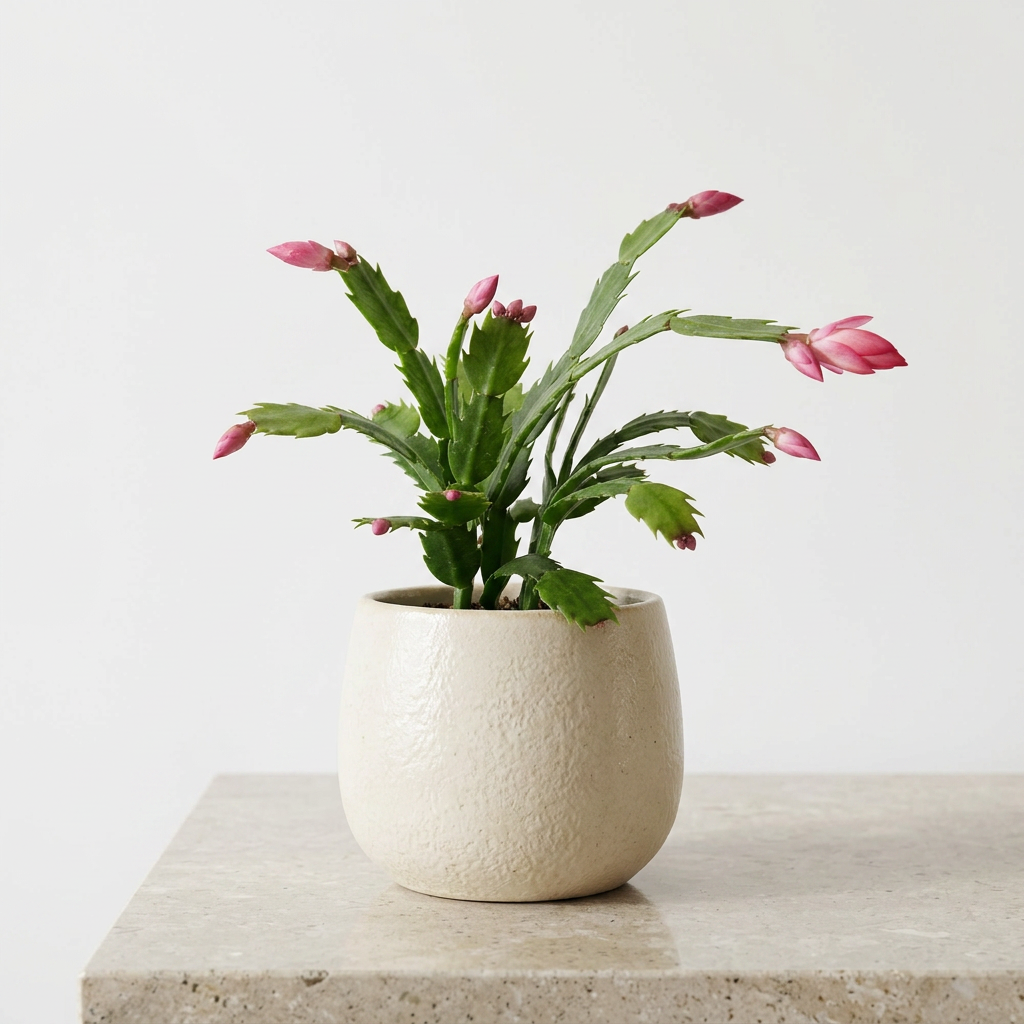


Christmas Cactus Schlumbergera Zygocactus - Pet Safe Non-Toxic Winter Blooming Houseplant
Christmas Cactus Schlumbergera Zygocactus - Pet Safe Non-Toxic Winter Blooming Houseplant
Couldn't load pickup availability
Botanical Name: Schlumbergera (Zygocactus)
Common Names: Christmas Cactus • Zygocactus • Holiday Cactus • Crab Cactus • Thanksgiving Cactus • Link Cactus
The Christmas Cactus (Schlumbergera, still widely sold as Zygocactus) spends most of the year as a quiet cascade of flat, segmented green stems, then does something no other houseplant does: it blooms in the dead of winter. The flowers are extraordinary up close, layered tubes of petals that flare backward and dangle from the tips of each stem, in white, blush, coral, fuchsia, or deep red, arriving exactly when everything else has gone dormant.
Despite the name, this is not a desert plant. Schlumbergera grows as an epiphyte in the humid coastal mountains of southeastern Brazil, wedged into tree branches and rock crevices, which is why it wants more water and more humidity than a spiny cactus ever would. It also has no spines at all. The ASPCA lists Christmas Cactus as non-toxic to dogs, cats, and horses, making it one of the few genuinely safe holiday plants, and these are famously long-lived. Well kept, a single plant is passed down through generations.
Complete Care Guide
- Bright, indirect light supports healthy segments and reliable flowering
- An east-facing window, or a few feet from a south or west window, is ideal
- Avoid harsh direct sun, which bleaches segments or turns them reddish purple
- Tolerates medium light, though blooming becomes less dependable
- Water when the top inch of soil is dry, roughly every 1-2 weeks
- This is a rainforest epiphyte, so do not treat it like a drought-tolerant desert cactus
- Water thoroughly until it drains, then empty the saucer completely
- Reduce water while buds are setting, then resume normal watering once flowers open
- Moderate to high humidity: 50-60% suits it best, and a pebble tray helps in winter
- Temperature range: 65-75°F (18-24°C) through most of the year
- Cool nights of 55-65°F (13-18°C) in autumn are what set the flower buds
- Keep away from heating vents, fireplaces, and cold drafts, all of which cause bud drop
- Use a chunky, fast-draining mix with orchid bark and perlite, closer to an orchid mix than a cactus mix
- Leave it slightly root-bound, as crowded roots encourage heavier flowering
- Feed monthly from spring through late summer with a balanced fertilizer at half strength
- Repot every 2-3 years, always after flowering finishes rather than before
- Give 12-14 hours of complete darkness nightly for 6-8 weeks to trigger buds
- Pair the long nights with cool temperatures and reduced watering
- Even a lamp or hallway light can interrupt the cycle, so a closet or spare room works well
- Once buds appear, stop moving the plant, since relocation is the leading cause of bud drop
Styling Ideas for Your Christmas Cactus
Shipping & Potting Information

Frequently Asked Questions
Is Zygocactus the same as Schlumbergera? ▼
Yes. Zygocactus is the older genus name for these plants, and botanists folded it into Schlumbergera decades ago. Plenty of growers, collectors, and older reference books still use Zygocactus, so you will see both names attached to the same holiday cactus. Nothing about the plant or its care changes with the name.
How do I get my Christmas Cactus to bloom? ▼
Buds are triggered by long nights and cool temperatures rather than by fertilizer. Starting six to eight weeks before you want flowers, give the plant 12 to 14 hours of completely uninterrupted darkness every night, keep it around 55 to 65°F, and cut back on water. Even a lamp switched on in the room can reset the cycle, so a spare room or closet is the easiest way to do it.
Do I water it like a regular cactus? ▼
No, and this is the mistake that costs most people their plant. Schlumbergera is an epiphyte from the humid coastal mountains of Brazil, not a desert species. In the wild it grows wedged into tree branches and rock crevices among leaf litter, so it wants soil that stays lightly moist rather than the long droughts a desert cactus prefers.
Why did all the buds fall off before opening? ▼
Bud drop is caused by change of almost any kind. Moving the plant to a new room, a cold draft from a door, a warm blast from a vent, or letting the soil swing between soaking and bone dry will all make it release buds. Once buds form, pick a spot and leave the plant alone until flowering finishes.
Is this plant safe for pets? ▼
Yes! The ASPCA lists Christmas Cactus as non-toxic to dogs, cats, and horses. It also has no spines, which sets it apart from nearly everything else sold as a cactus. Between those two things it is one of the safest holiday plants you can bring home, especially compared to mistletoe, holly, and amaryllis, which are all toxic to pets.