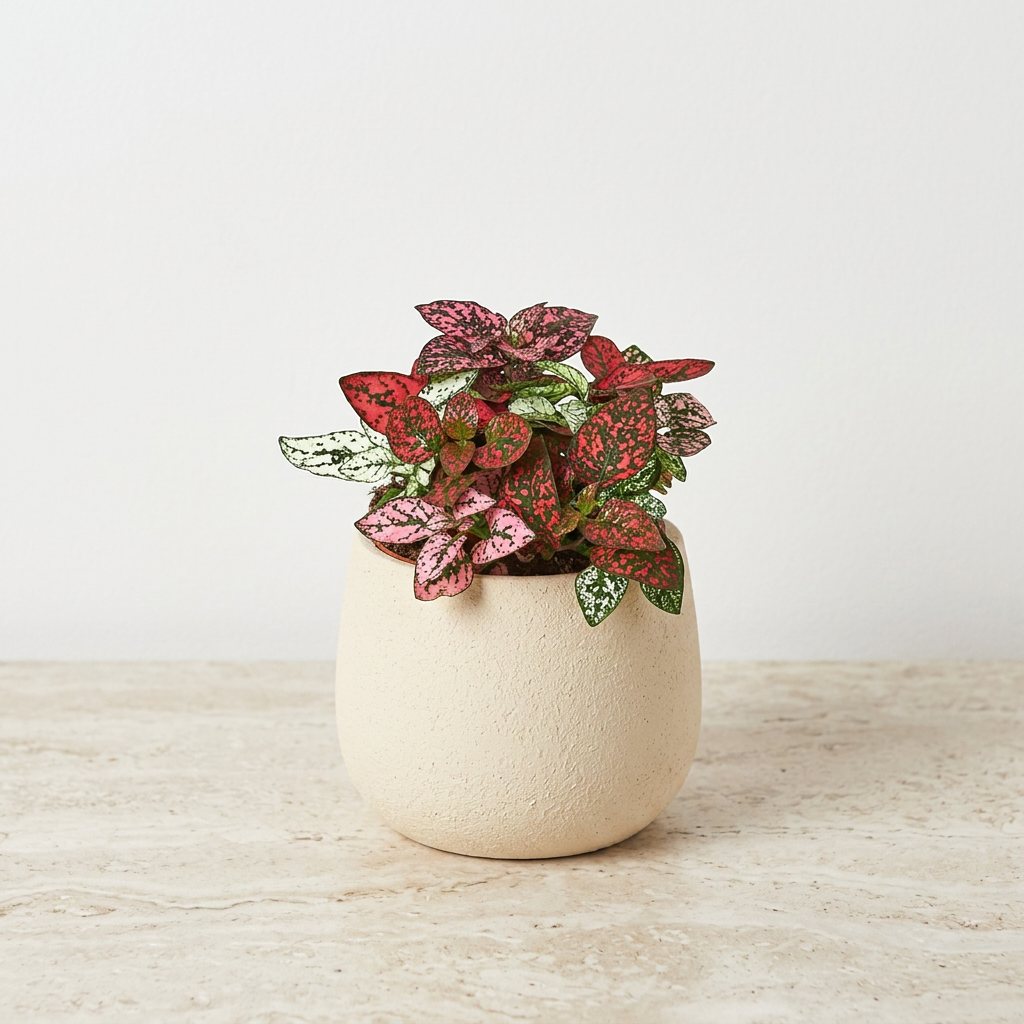


Hypoestes Polka Dot Plant - Pet Safe Non-Toxic Pink Speckled Freckle Face Houseplant
Hypoestes Polka Dot Plant - Pet Safe Non-Toxic Pink Speckled Freckle Face Houseplant
Couldn't load pickup availability
Botanical Name: Hypoestes phyllostachya
Common Names: Polka Dot Plant • Freckle Face • Measles Plant • Flamingo Plant • Pink Splash • Baby's Tears
The Polka Dot Plant (Hypoestes phyllostachya) looks hand-painted. Every leaf is splashed and freckled in pink, rose, white, or deep red across a green base, in a pattern so irregular that no two leaves match and no two plants are quite alike. It stays small, usually under a foot in a pot, which makes it one of the few genuinely colorful plants you can tuck onto a desk, a windowsill, or into a terrarium.
Native to Madagascar, it wants what that suggests: warmth, humidity, and steady moisture. It is expressive to the point of theatrical, wilting dramatically the moment it gets thirsty and perking back up within hours of a drink. It also rewards a little hands-on attention, since regular pinching is what keeps it bushy rather than lanky. The ASPCA lists Hypoestes phyllostachya as non-toxic to dogs, cats, and horses, so it is safe on a low shelf where its color actually gets seen.
Complete Care Guide
- Bright, indirect light produces the boldest, most saturated freckling
- An east-facing window, or a few feet from a south or west window, is ideal
- Too little light and new leaves come in greener with sparse spotting
- Harsh direct sun bleaches the pink areas and scorches the pale tissue
- Keep the soil lightly and evenly moist, watering when the top inch feels dry
- This plant stores no water and wilts dramatically once it dries out
- A thorough watering usually revives a wilted plant within a few hours
- Water thoroughly until it drains, and never leave the pot standing in water
- Humidity of 50-60% or higher keeps the leaf edges from crisping
- Thrives in terrariums, cloches, and bright bathrooms where humidity stays high
- Temperature range: 65-80°F (18-27°C), never below 60°F (15°C)
- Keep away from heating vents, air conditioning, and cold drafts
- Use a rich, moisture-retentive but well-draining mix of peat or coco coir with perlite
- Always choose a pot with drainage holes, and keep it small since roots stay shallow
- Feed monthly in spring and summer with a balanced fertilizer at half strength
- Repot only when roots fill the pot, as this plant prefers snug quarters
- Pinch the top set of leaves every few weeks to force branching and keep the plant full
- Remove lilac flower spikes as soon as they appear, since flowering often triggers decline
- Root the pinched tips in water within a week or two to grow replacement plants
- Starting fresh cuttings each year is how most growers keep the same plant going indefinitely
Styling Ideas for Your Polka Dot Plant
Shipping & Potting Information

Frequently Asked Questions
Why is my Polka Dot Plant getting tall and leggy? ▼
Polka Dot Plants stretch naturally and need regular pinching to stay full. Pinch off the top set of leaves every few weeks through the growing season and the plant will branch outward instead of reaching upward. Legginess that comes on quickly usually means the light is too dim as well, so check both.
Should I let my Polka Dot Plant flower? ▼
No, and this is the piece of care advice most people never hear. Small lilac flower spikes appear on mature plants, and once flowering finishes the plant frequently goes dormant or declines sharply. Pinch the spikes off as soon as you spot them and you will keep the foliage looking good for far longer.
Why are the pink spots fading? ▼
Spotting responds directly to light. In dim conditions the plant produces more chlorophyll and new leaves come in greener, while harsh direct sun washes the color out and scorches the pale areas. Bright indirect light sits in the middle and gives the strongest, most saturated freckling.
How long do Polka Dot Plants live? ▼
Indoors they are naturally short-lived, often one to two years before declining, particularly after flowering. That is the plant's habit rather than a care failure. The good news is that cuttings root in water within a week or two, so most growers simply keep the line going by potting up the tips they pinch off, and never really run out.
Is this plant safe for pets? ▼
Yes. The ASPCA lists Hypoestes phyllostachya as non-toxic to dogs, cats, and horses. The ASPCA entry does note that a pet eating a large quantity may experience mild vomiting or diarrhea, which is true of any non-food plant material and reflects difficulty digesting fiber rather than any toxic compound.