
Pachira Aquatica Guiana Chestnut Money Tree Stump - Pet Safe Non-Toxic Single Trunk Form
Pachira Aquatica Guiana Chestnut Money Tree Stump - Pet Safe Non-Toxic Single Trunk Form
Couldn't load pickup availability
Botanical Name: Pachira aquatica
Common Names: Money Tree • Guiana Chestnut • Malabar Chestnut • Saba Nut • Provision Tree • Good Luck Tree
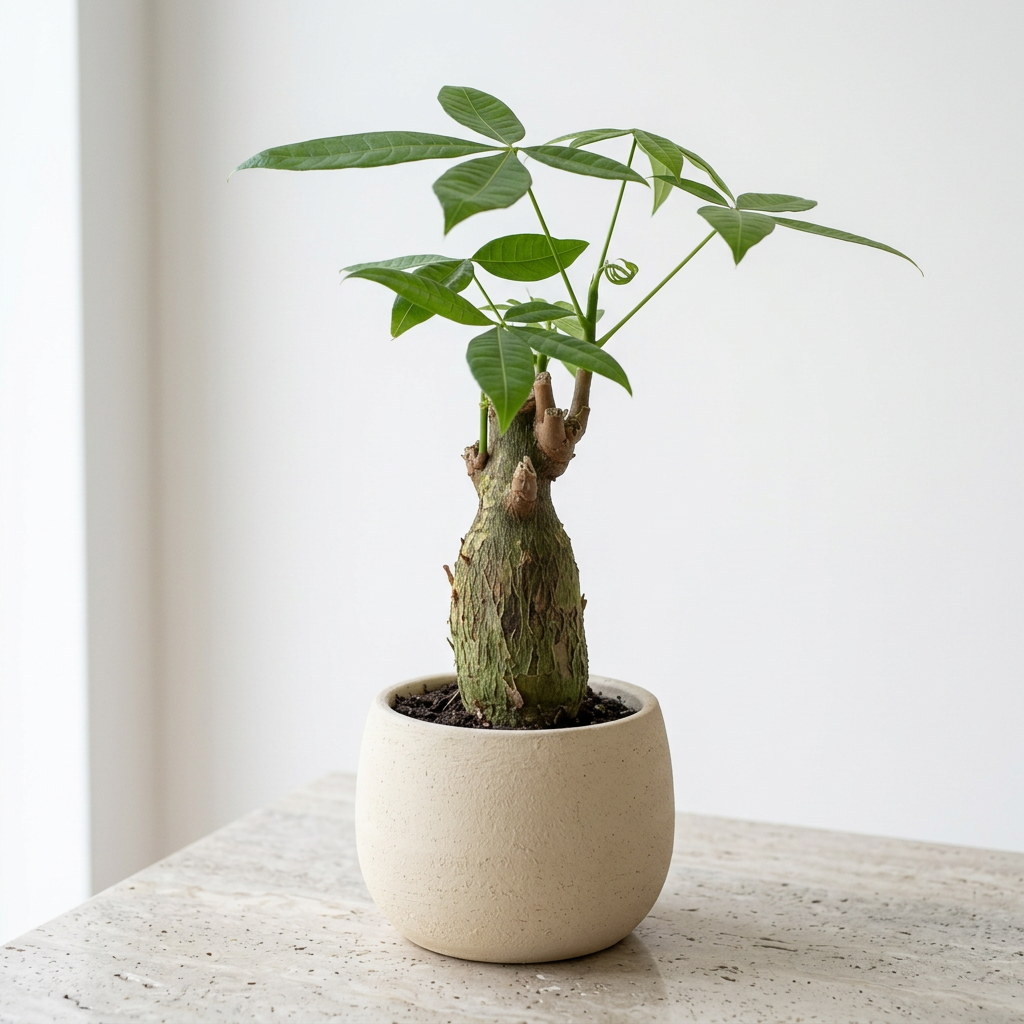
The Money Tree stump (Pachira aquatica) is the sculptural cousin of the familiar braided version. Instead of woven stems, you get one substantial trunk with a swollen, water-storing base, cut flat at the crown and crowned with a burst of new shoots. Each shoot carries the plant's signature palmate leaves, five to seven glossy leaflets fanning out like an open hand, so the whole thing reads like a small tree that has been living somewhere a long time.
Native to the seasonally flooded wetlands of Central and South America, this is a genuinely tough plant that stores its own water reserve and forgives a missed watering. It carries centuries of prosperity symbolism, which is how it became one of the most gifted plants in the world, and the ASPCA lists Pachira aquatica as non-toxic to dogs, cats, and horses. That last part matters more than it sounds, because several unrelated plants are also sold as money trees and most of them are not safe for pets.
Complete Care Guide
- Bright, indirect light produces the fullest canopy and the deepest leaf color
- An east-facing window, or a few feet from a south or west window, is ideal
- Rotate the pot a quarter turn every week or two so the canopy fills in evenly
- Tolerates medium light with slower growth, but avoid harsh direct sun, which scorches leaflets
- Water when the top 2-3 inches of soil are dry (typically every 1-2 weeks)
- The swollen trunk base holds a water reserve, so underwatering is far safer than overwatering
- Water thoroughly until it drains, then empty the saucer completely
- Reduce noticeably in winter, when soggy soil and root rot cause most losses
- Moderate humidity: 40-60% - average household air is fine, though extra humidity reduces brown tips
- Temperature range: 65-80°F (18-27°C) with good air circulation
- Keep above 50°F (10°C) and away from cold winter glass
- Protect from heating vents, air conditioning, and drafty doorways
- Use a well-draining mix of potting soil with added perlite or coarse sand
- Always choose a pot with drainage holes, and keep the trunk base at soil level rather than buried
- Feed monthly in spring and summer with a balanced fertilizer at half strength
- Repot every 2-3 years in spring, moving up just one pot size
- New growth emerges from the crown of the cut trunk as a cluster of shoots
- Trim the longest shoots in spring to keep the canopy compact and balanced
- Never cut into the trunk itself, which should stay intact as the plant's water reserve
- Wipe the leaflets occasionally with a soft damp cloth to keep them glossy
Styling Ideas for Your Money Tree Stump
Shipping & Potting Information

Frequently Asked Questions
What is the difference between a stump Money Tree and a braided one? ▼
A braided Money Tree is several young trunks woven together while they are still pliable. A stump form is a single mature trunk cut back hard, with a thick swollen base and a fresh canopy sprouting from the crown. The stump reads more sculptural and bonsai-like, and because there is only one trunk, it avoids the girdling that can develop years later as braided trunks thicken and press against each other.
Will the trunk grow taller from the cut top? ▼
Not as a single leader. New shoots emerge from the crown of the cut trunk and form a canopy above it, so the plant gains height and fullness through those branches while the trunk itself stays roughly the same size. That contrast between a heavy trunk and a light canopy is exactly what gives the stump form its proportions.
Why is the base of the trunk so swollen? ▼
Pachira aquatica evolved in seasonally flooded wetlands and stores water in its thickened trunk base. That built-in reserve is why the plant shrugs off a missed watering, and also why overwatering is the single most common way people lose one. When in doubt, wait another few days.
Is this plant safe for pets? ▼
Yes! The ASPCA lists Pachira aquatica as non-toxic to dogs, cats, and horses. This is one worth paying attention to, because several unrelated plants are commonly sold as money trees, including jade plant (Crassula ovata) and lucky bamboo (Dracaena sanderiana), and both of those are toxic to cats and dogs. Only Pachira aquatica is the non-toxic money tree, so always check the botanical name.
Why are the lower leaves turning yellow and dropping? ▼
Yellowing lower leaves nearly always mean too much water. Let the top 2 to 3 inches of soil dry out fully before watering again, and confirm the pot drains freely rather than holding moisture at the bottom. Some leaf drop during the first few weeks after arrival is normal acclimation as the plant adjusts to your light and humidity.