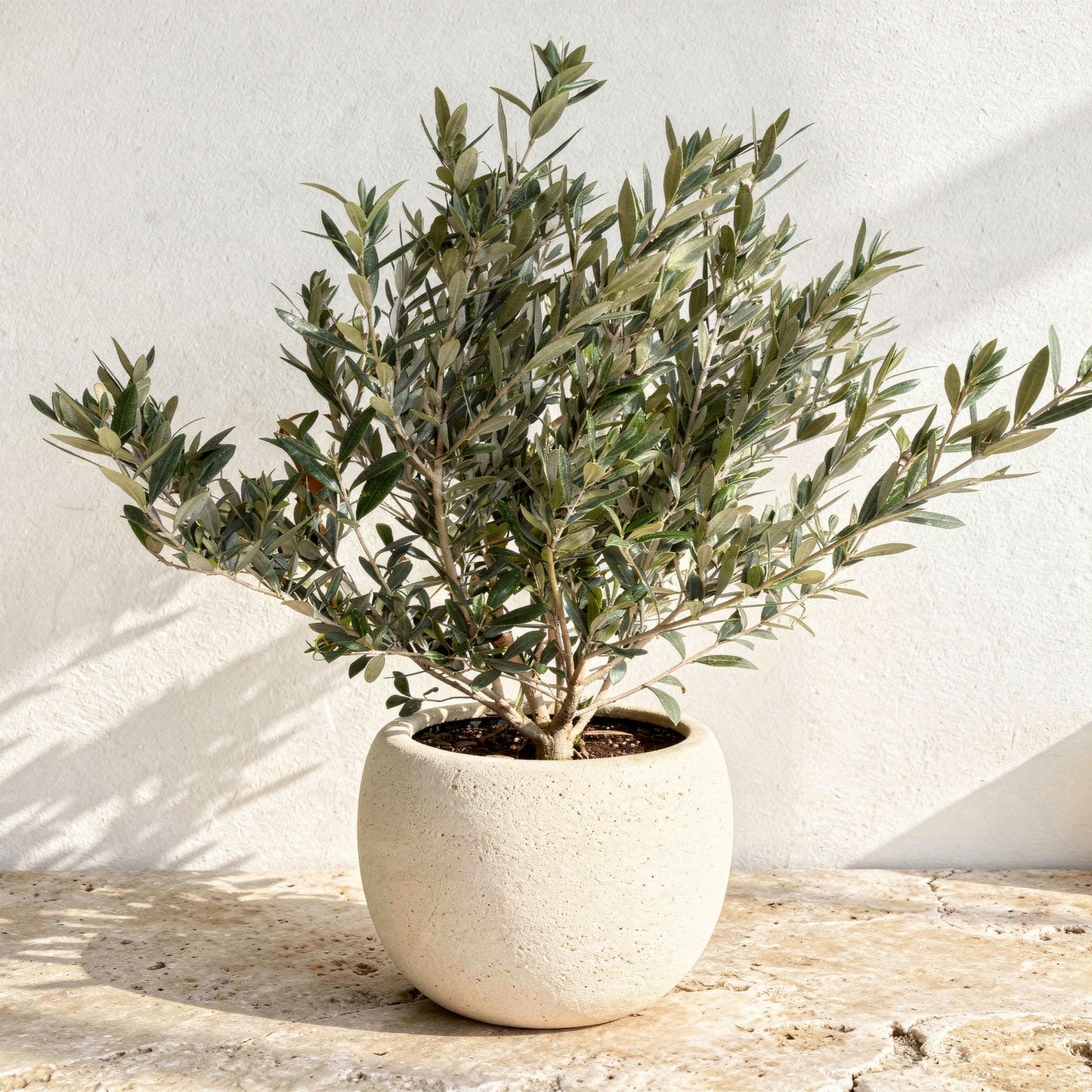


Olive Tree (Olea europaea)
Olive Tree (Olea europaea)
Couldn't load pickup availability
The olive tree brings a relaxed, Mediterranean look indoors, with slender trunks and narrow, silvery green leaves. It's a statement tree for your sunniest window, and it isn't on the ASPCA's list of plants toxic to cats or dogs.
| Botanical name | Olea europaea |
| Pet safety | Not on the ASPCA toxic plant list |
| Light | Very bright, with several hours of direct sun |
| Mature size | Grows slowly to 4 to 6 feet indoors |
| Care level | Moderate |
How to care for it
- Light: the most light you can give it. A south or west window is best. Low light causes leaf drop.
- Water: let the top couple of inches of soil dry, then water thoroughly. Don't let it sit in water.
- Soil: a fast-draining mix in a pot with a drainage hole.
- Temperature: average home temperatures. It tolerates cool winters well.
Common questions
Is it safe for cats and dogs?
The ASPCA doesn't list olive trees as toxic to cats or dogs. As with any plant, a pet that eats a lot of it may get an upset stomach.
Why is it dropping leaves?
Almost always not enough light. Move it to your sunniest window. Some leaf drop right after moving to a new home is also normal while it adjusts.
Ships in its nursery pot. Decorative pots in the photos are not included.
Explore more pet-safe plants.
Share
- 5 stars: 8 (89%)
- 4 stars: 0 (0%)
- 3 stars: 0 (0%)
- 2 stars: 1 (11%)
- 1 star: 0 (0%)
Its a beautiful tree now lets see how it fairs at the house in her new home.
Thanks team
I got two of the 6 inch pots and they are perfect accent plants! Thank you
The trees arrived stressed and have not come back. Its an expensive tree to arrive like that
Hi Jennifer, I'm so sorry your olive trees arrived stressed. None of our plants should ever show up that way, and if they ever do, our 30-day healthy plant guarantee is there to cover it. Since you posted this, we've been in touch by email and sent free replacements for both trees, the second of which is on its way to you now and will arrive Tuesday. I hope they settle in well. Please keep me posted, and if they don't come around, email me directly and we'll make it right.
Warm regards,
Nikki
Root & Reach Botanicals
Super fast shipping. My olive tree arrived in 3 days in perfect condition! Love that all your plants are pet friendly and can't wait to buy more!
I've ordered 4 of these now. I have one in every room. They are so beautiful. I'm so happy I discovered Root & Reach. Wonderful little plant shop.
Incredible plants and customer service! I ordered the 6 in olive tree and it's so beautiful!
My olive tree is absolutely adorable!! This is my second plant from Root & Reach Botanicals, and it arrived just as healthy as my fern!
I bought the 6 inch olive tree and repotted it and put it in my bedroom and it's absolutely beautiful and thriving! Highly recommend if you're looking to add a little Mediterranean to your space. Shipping was very fast for being free, I got it 5 days after ordering it.
This 6 inch olive tree was so adorable I just ordered another one for my office! This is exactly what I was looking for. It looks amazing in my dining room. It shipped quickly and was packaged with so much care. Wonderful shopping experience.