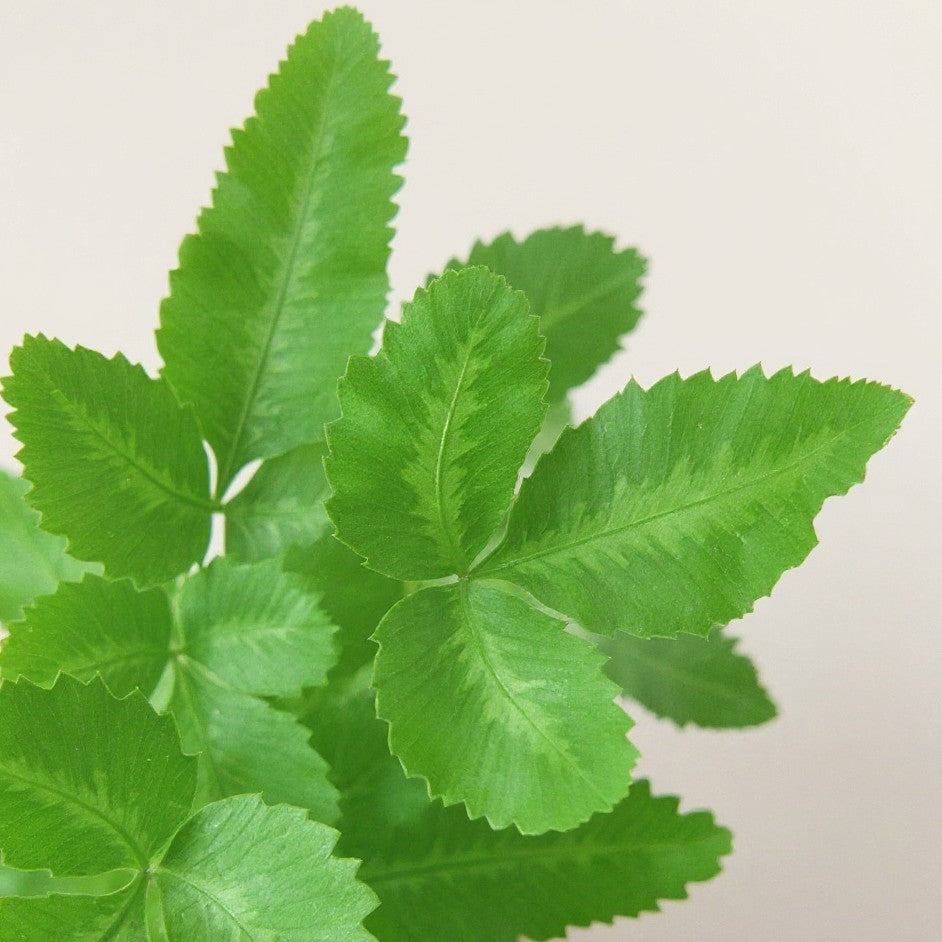


Pteris Cretica Albolineata Silver Ribbon Fern - Pet Safe Non-Toxic Fern Plant
Pteris Cretica Albolineata Silver Ribbon Fern - Pet Safe Non-Toxic Fern Plant
Couldn't load pickup availability
Botanical Name: Pteris cretica var. albolineata
Common Names: Silver Ribbon Fern • Albolineata Fern • Cretan Brake Fern • Cretan Fern • Variegated Table Fern • Albo Fern
The Pteris cretica var. albolineata, known widely as the Silver Ribbon Fern, is one of the most visually distinctive ferns available for indoor growing, featuring arching green fronds with a bold creamy white or pale silver stripe running down the center of each leaflet in a clean, graphic pattern that catches the light and stands out beautifully against any background. Native to a remarkably wide range spanning Europe, Asia, and Africa and a member of the ancient Pteridaceae family, this fern has thrived across diverse climates for millions of years, giving it the kind of adaptability and resilience that makes it genuinely approachable for beginning plant owners.
Unlike many ferns that demand constant vigilance over humidity and moisture, the Silver Ribbon Fern is notably more forgiving of typical indoor conditions, tolerating medium light, moderate humidity, and occasional inconsistency in care better than most of its more temperamental relatives. Confirmed non-toxic to cats, dogs, and horses by the ASPCA, this is a pet-safe statement fern that brings the crisp elegance of variegated foliage to shelves, desks, bathrooms, and plant groupings with very little in return other than consistent moisture and a spot away from harsh direct sun.
Complete Care Guide
- Bright indirect to medium indirect light produces the most vibrant frond coloration and vigorous growth
- North or east-facing windows provide consistently ideal indoor growing conditions
- Tolerates lower light better than many ferns, though fronds may become less dense in very dim spots
- Never expose to hot, direct sunlight, which will scorch and bleach the delicate fronds
- If fronds appear pale or washed out, move slightly closer to the light source; if tips are browning in a bright spot, pull back from the window
- Keep the top inch of soil consistently lightly moist at all times; check every few days rather than on a fixed schedule
- This fern is not drought tolerant; allowing the soil to dry out completely causes rapid browning that is difficult to reverse
- Never allow the plant to sit in standing water in a saucer, which leads to root rot
- Use filtered water, rainwater, or tap water left to sit overnight; hard tap water can cause frond tip browning over time
- Reduce watering slightly in fall and winter as growth slows, but do not allow soil to dry out fully even in cooler months
- Prefers humidity above 50% but adapts to moderate household humidity better than most ferns
- Ideal temperature range: 60 to 75 degrees F (16 to 24 degrees C) with consistent warmth
- Boost humidity with a pebble tray filled with water, a nearby humidifier, or by grouping with other moisture-loving plants
- Bathrooms and kitchens with natural light are ideal placements that provide naturally elevated humidity
- Keep away from cold drafts, heating vents, and air conditioning units; avoid temperatures below 55 degrees F (13 degrees C)
- Use a well-draining potting mix with good moisture retention; a blend of standard potting soil with coco coir or peat and added perlite works well
- Shallow, wide containers suit the Silver Ribbon Fern's naturally shallow, rhizomatous root system
- Always use a pot with drainage holes; empty the saucer after watering to prevent the roots from sitting in standing water
- Feed every two to four weeks during spring and summer with a balanced liquid fertilizer diluted to half strength; do not over-fertilize as the roots are sensitive
- Repot every two to three years or when roots become very crowded; this fern is slow-growing and prefers a slightly snug fit
- Propagate by rhizome division in spring, separating the root ball into sections, each with several fronds and a portion of rhizome at least 3 inches in length
- Plant divided sections in moist potting mix and keep in a warm, humid spot away from direct light until new growth appears
- Remove yellowed or brown fronds by cutting at the base with clean scissors to keep the plant looking its best and encourage fresh growth
- Wipe fronds occasionally with a damp cloth to remove dust and allow the plant to absorb light more efficiently
- Mist the foliage in the morning rather than the evening to reduce the risk of fungal issues on the leaf surface
Styling Ideas for Your Silver Ribbon Fern
Shipping & Potting Information

Frequently Asked Questions
What makes the Silver Ribbon Fern different from other ferns? ▼
The Silver Ribbon Fern stands apart from most ferns in two ways: its appearance and its adaptability. Visually, it is defined by a bold creamy white or pale silver stripe running down the center of each green leaflet, a clean, graphic variegation that most ferns do not have. In terms of care, it is considerably more forgiving than many popular fern varieties, tolerating lower humidity, medium light, and occasional inconsistency in watering much better than more delicate ferns. Its wide natural range across Europe, Asia, and Africa speaks to the inherent resilience that makes it one of the most beginner-friendly ferns available.
Is this plant safe around pets and children? ▼
Yes. The ASPCA confirms that the entire Pteris genus is non-toxic to cats, dogs, and horses. Pteris cretica contains no harmful compounds such as calcium oxalate crystals and poses no known toxicity risk to humans, making it a genuinely worry-free choice for households with curious pets and young children.
How do I keep the soil moisture right for my Silver Ribbon Fern? ▼
The Silver Ribbon Fern prefers soil that stays consistently lightly moist at all times. Check the top inch of soil every few days and water before it dries out completely. Unlike succulents or drought-tolerant plants, this fern does not bounce back well from prolonged dry spells and will show browning or yellowing quickly when left without water. At the same time, never allow the plant to sit in standing water in the saucer, which causes root rot. A pot with drainage holes and filtered or overnight-rested tap water are both good habits for long-term success.
How large will my Silver Ribbon Fern grow indoors? ▼
Indoors, Pteris cretica 'Albolineata' typically reaches 1 to 2.5 feet in both height and width over several years. It is a moderate grower with most active growth during spring and summer. New fronds develop from the base and grow progressively longer over time, giving the plant a layered, increasingly lush volume. Its manageable size makes it well suited for shelves, desks, tabletops, and hanging baskets without overwhelming a space.
Why are the frond tips on my Silver Ribbon Fern turning brown? ▼
Brown frond tips are most commonly caused by one of three things: low humidity, inconsistent watering, or the mineral content in hard tap water. Increase humidity around the plant using a pebble tray, a humidifier, or by moving the plant to a naturally humid room like a bathroom or kitchen. Keep the soil consistently lightly moist between waterings, and switch to filtered water or tap water left to sit in an open container overnight. Trim any brown tips with clean scissors to keep the plant looking its best while you adjust its conditions.