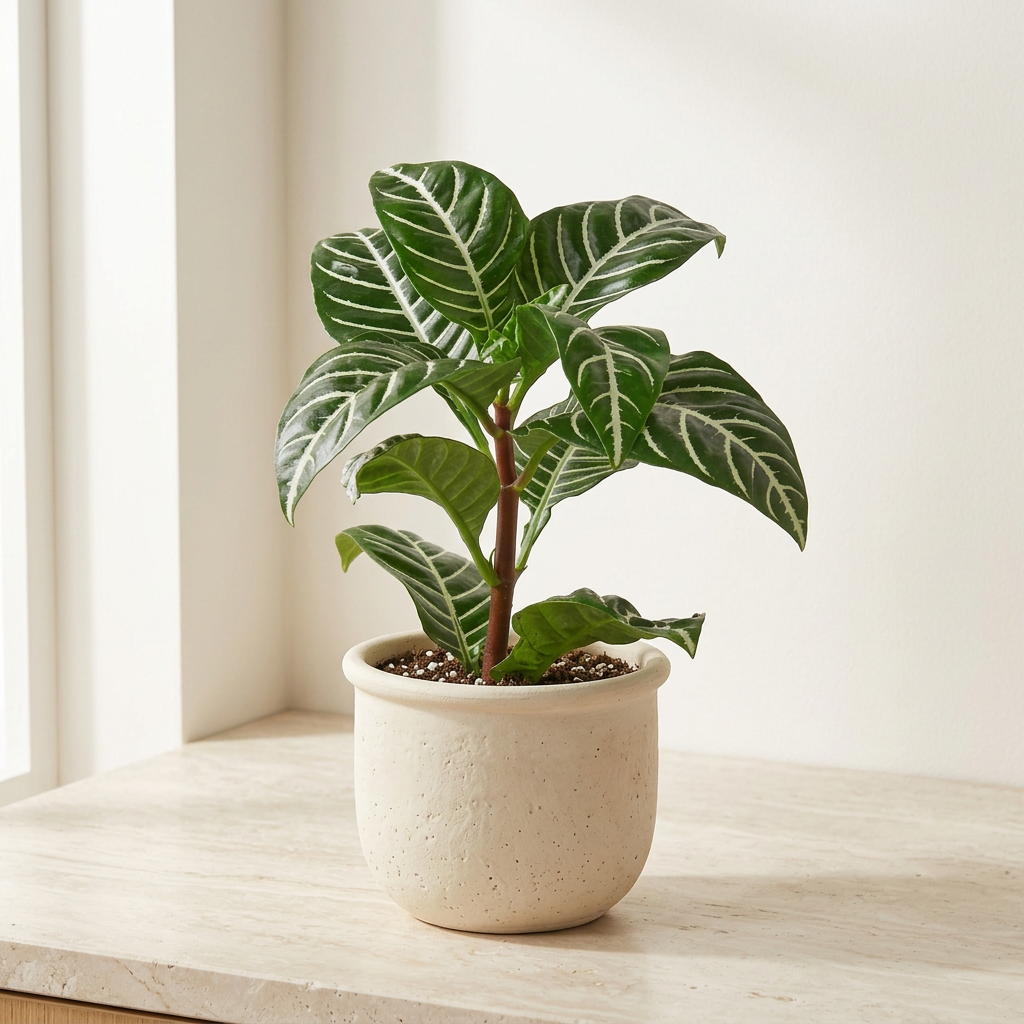


Zebra Plant Aphelandra Squarrosa - Pet Safe Non-Toxic Striped Leaf Flowering Houseplant
Zebra Plant Aphelandra Squarrosa - Pet Safe Non-Toxic Striped Leaf Flowering Houseplant
Couldn't load pickup availability
Botanical Name: Aphelandra squarrosa
Common Names: Zebra Plant • Saffron Spike • Saffron Spike Zebra • Snow White • Zebra Aphelandra
The Zebra Plant (Aphelandra squarrosa) looks like it was drawn with a ruler. Deep, glossy, near-black green leaves are crossed by crisp ivory veins that run out from the midrib in perfectly regular stripes, and the contrast is sharp enough to read from across a room. Then, in late summer and autumn, a mature plant sends up a tall cone of golden yellow bracts from the top of each stem, holding its color for weeks.
This is a rainforest floor plant from Brazil, and it has not compromised much for indoor life. It wants warmth, humidity, and steadily moist soil, and it will tell you loudly when it does not get them. Owners who meet those conditions get one of the most striking foliage plants there is. The ASPCA lists Aphelandra squarrosa as non-toxic to dogs, cats, and horses, so the drama here stays entirely in the leaves.
Complete Care Guide
- Bright, indirect light keeps the veining sharp and supports flowering
- An east-facing window, or a few feet back from a south or west window, is ideal
- Never direct sun, which scorches and curls the glossy leaves quickly
- Too little light causes leggy stems and washed-out striping
- Keep the soil lightly and evenly moist, watering when the top inch feels dry
- This plant tolerates neither drought nor sogginess, so consistency matters more than volume
- Use room-temperature water, as cold water shocks the roots and triggers leaf drop
- Water thoroughly until it drains, then empty the saucer completely
- Humidity of 60% or higher is the single biggest factor in keeping leaves on the plant
- Run a humidifier nearby, group with other plants, or use a pebble tray
- Temperature range: 65-80°F (18-27°C), never below 60°F (15°C)
- Keep away from heating vents, air conditioning, and drafty doorways
- Use a rich, moisture-retentive but well-draining mix of peat or coco coir with perlite
- Always choose a pot with drainage holes, since wet feet cause rapid decline
- Feed every 2 weeks through spring and summer at half strength to support blooming
- Repot every 1-2 years in spring, moving up only one pot size
- Cut the spent flower bract off at its base once it browns, as leaving it drains the plant
- Prune the stem back to the top pair of healthy leaves to encourage branching
- Give a slightly cooler, drier winter rest to set the next season's blooms
- Root stem cuttings in spring, since older plants naturally go leggy over time
Styling Ideas for Your Zebra Plant
Shipping & Potting Information

Frequently Asked Questions
Is this the same as a Calathea Zebrina zebra plant? ▼
No, and the two get confused constantly. Aphelandra squarrosa has glossy dark leaves with sharp white veining and produces tall yellow flower bracts. Calathea zebrina has softer, velvety leaves with broad pale banding and does not flower indoors. They belong to different plant families with different care needs, though both are pet-safe.
What do I do after the yellow flower fades? ▼
Cut the spent bract off at its base as soon as it starts to brown, taking the stem down to the top set of healthy leaves. Leaving it in place pulls energy the plant would rather put into foliage, and pruning at that moment encourages branching, which gives you a fuller, better-shaped plant next season.
Why are the lower leaves dropping? ▼
Leaf drop is this plant's response to nearly any stress: dry air, cold drafts, soil that went too dry, or soil that stayed too wet. Indoors, humidity is the usual culprit. Aim for 60 percent or higher and keep the soil lightly and evenly moist, and the dropping generally stops within a few weeks.
Will it flower again? ▼
Yes, though it takes deliberate conditions rather than luck. Zebra plants bloom in late summer and autumn on mature stems given bright indirect light, high humidity, steady feeding through the growing season, and a slightly cooler, drier rest in winter. Plenty of people grow this one purely for the striped foliage and treat any bloom as a bonus.
Is this plant safe for pets? ▼
Yes. The ASPCA lists Aphelandra squarrosa as non-toxic to dogs, cats, and horses, filed under the common name Saffron Spike Zebra, which is worth knowing if you search their database and cannot find it under Zebra Plant. NC State Extension records the same classification.