

The pet-safe plants from the famous air-quality research are spider plant, bamboo palm, areca palm, Boston fern and gerbera daisy. All are listed as non-toxic to cats and dogs by the ASPCA. Most of the other "top air purifying plants," including pothos, snake plant and peace lily, are toxic to pets. One honest caveat: in a real home, houseplants only clean the air a little. Buy them because they're beautiful and safe, not as an air purifier.


What the research actually found
Almost every "air purifying plant" list traces back to one source: NASA's 1989 Clean Air Study, led by Dr. B.C. Wolverton. Researchers put houseplants in small sealed chambers, added chemicals like formaldehyde and benzene, and measured how much disappeared over 24 hours. Many plants did reduce those chemicals, which is where the famous claims come from.
Wolverton later tested more plants and ranked them in his book How to Grow Fresh Air. Areca palm, lady palm and bamboo palm came out on top, and Boston fern ranked highly as well.
The catch: a sealed chamber the size of a microwave is nothing like a house. In 2019, researchers at Drexel University reviewed decades of these studies and found you'd need somewhere between 10 and 1,000 plants per square meter to match what normal ventilation already does. A few plants won't measurably change your air.
So why buy them? Plants make a room feel alive, add a little humidity, and are good for your mood. For cleaner air, open a window or run a HEPA air purifier. For a home with pets, choose plants that are safe if chewed.
The famous "air purifiers" that are toxic to pets
Here's the problem for pet owners: most of the plants that made the research famous are on the ASPCA's toxic list.
| Plant | Studied by | Cats & dogs |
|---|---|---|
| Pothos | NASA 1989 | Toxic |
| Snake plant | NASA 1989 | Toxic |
| Peace lily | NASA 1989 | Toxic |
| English ivy | NASA 1989 | Toxic |
| Dracaena (corn plant, Janet Craig) | NASA 1989 | Toxic |
| Philodendron | NASA 1989 | Toxic |
| Chinese evergreen | NASA 1989 | Toxic |
| Rubber plant | Wolverton | Toxic |
Already own one of these? Check it in our plant safety lookup tool and see our guide to plants toxic to cats and dogs.
The pet-safe picks from the research
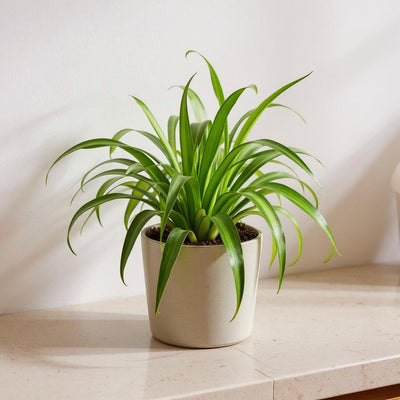
1. Spider plant (Chlorophytum comosum)
Tested in NASA's 1989 study and listed as non-toxic to cats and dogs. It's one of the easiest houseplants there is: it handles low to bright light, forgives missed waterings, and grows baby plantlets you can root and share. Cats love chewing the long leaves, so hang it high to keep it looking good. Shop Hawaiian spider plant or the curly Bonnie spider plant.
2. Areca palm (Dypsis lutescens)
Wolverton's top-ranked plant, and listed as non-toxic to cats and dogs. Feathery, arching fronds and a big tropical look, growing to 6 feet or more indoors in bright, indirect light. A great pet-safe swap for a fiddle leaf fig. Shop areca palm.
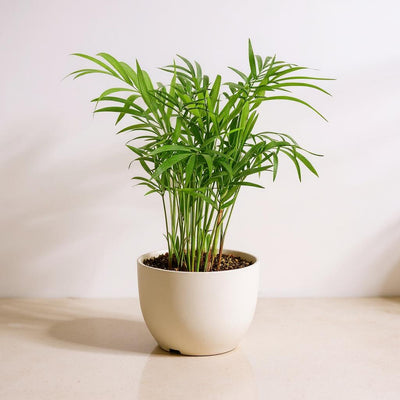
3. Bamboo palm (Chamaedorea seifrizii)
Tested in NASA's 1989 study, ranked near the top by Wolverton, and listed as non-toxic to pets. A clumping palm that handles medium light. Its close relative, the parlor palm (Chamaedorea elegans), is smaller, handles lower light and is also non-toxic.
4. Boston fern (Nephrolepis exaltata)
Ranked highly by Wolverton and listed as non-toxic to cats and dogs. Lush, soft fronds that love humidity, so a bright bathroom is perfect. The Emina (curly Boston) fern is a tidier, more compact version.
5. Gerbera daisy (Gerbera jamesonii)
Tested in NASA's 1989 study and listed as non-toxic to pets. It's a flowering plant that needs lots of light and is often grown as a short-lived seasonal pot, so it's less practical as a long-term houseplant.
Also easy and pet-safe
These weren't the stars of the research, but they're listed as non-toxic to cats and dogs and are great in pet homes: bird's nest fern (handles normal household humidity), money tree (a small indoor tree), and calatheas (bold patterned leaves).
Quick comparison
| Plant | In the research? | Light | Care | Cats & dogs |
|---|---|---|---|---|
| Spider plant | NASA 1989 | Low to bright | Very easy | Non-toxic |
| Areca palm | Wolverton (top-ranked) | Bright indirect | Moderate | Non-toxic |
| Bamboo palm | NASA 1989 + Wolverton | Medium | Easy | Non-toxic |
| Boston fern | Wolverton | Medium to bright | Moderate | Non-toxic |
| Parlor palm | Relative of bamboo palm | Low to medium | Easy | Non-toxic |
| Bird's nest fern | No | Low to medium | Easy | Non-toxic |
What actually improves indoor air
- Ventilation: open windows when you can and run bathroom and kitchen fans.
- A HEPA air purifier: the only thing on this list that reliably removes pet dander, dust and pollen.
- Less source pollution: fragrance-free cleaners, and airing out new furniture and paint.
- Plants: for beauty, a little humidity and a calmer room. Choose pet-safe ones.
FAQ
What is the best air purifying plant that's safe for cats?
Spider plant: it was in NASA's study, it's non-toxic, and it's nearly impossible to kill. Hang it up, because cats love to chew it.
Do plants help with pet allergies?
Not in any meaningful way. Houseplants don't remove pet dander from the air. A HEPA air purifier, regular vacuuming and washing pet bedding make a real difference.
How many plants do I need to clean the air?
No realistic number of houseplants will measurably clean the air in a typical home. Buy as many as you enjoy caring for, and rely on ventilation or an air purifier for air quality.
Are snake plants and pothos safe for pets?
No. Both are listed as toxic to cats and dogs by the ASPCA, even though they top most air purifying plant lists.
Shop pet-safe plants from the research
Every plant we sell is listed as non-toxic to cats and dogs. Free shipping and a 30-day plant health guarantee.
Shop air purifying plantsWritten and reviewed by Nikki, founder of Root & Reach Botanicals. Last updated September 2026. Sources: Wolverton, Johnson & Bounds, Interior Landscape Plants for Indoor Air Pollution Abatement (NASA, 1989); Wolverton, How to Grow Fresh Air (1996); Cummings & Waring, "Potted plants do not improve indoor air quality" (Journal of Exposure Science & Environmental Epidemiology, 2019); ASPCA Animal Poison Control Center plant lists for cats and dogs.