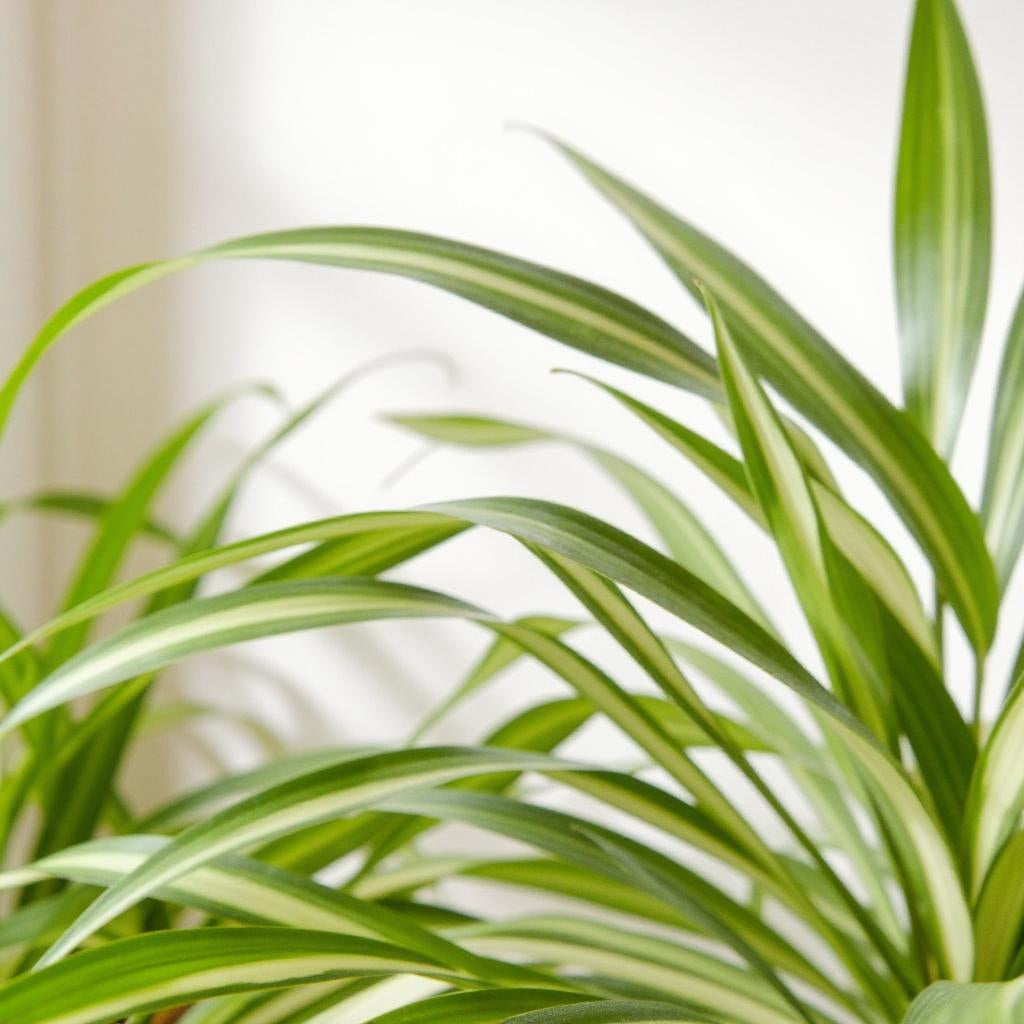


Hawaiian Spider Plant (Chlorophytum comosum)
Hawaiian Spider Plant (Chlorophytum comosum)
Couldn't load pickup availability
The Hawaiian spider plant has broader, fuller leaves than the classic spider plant, striped in soft green and cream, often with a warm golden glow on new growth. As it matures, it sends out long arching stems with baby plantlets that cascade beautifully from a hanging basket or high shelf. It's one of the easiest houseplants you can own, and the ASPCA lists spider plant as non-toxic to cats and dogs.
Quick facts
| Botanical name | Chlorophytum comosum 'Hawaiian' |
| Also called | Hawaiian spider plant, variegated spider plant, airplane plant, ribbon plant |
| Pets | Non-toxic to cats and dogs (listed by the ASPCA) |
| Light | Bright, indirect light; tolerates lower light |
| Water | When the top inch of soil is dry, about every 1 to 2 weeks |
| Growth | Fast; arching leaves with trailing stems of baby plantlets |
| Care level | Very easy, great for beginners |
Why you'll love it
- Fuller than the classic: broad, lush leaves give it more presence in a hanging basket.
- Grows fast: you'll see steady new growth through spring and summer.
- Free plants: mature plants grow babies you can root and share.
Care guide
Light: Bright, indirect light keeps the striping crisp and encourages baby plantlets. It handles lower light better than most variegated plants, though it grows slower and greener there. A little morning sun is fine; harsh afternoon sun can scorch the leaves.
Water: Water thoroughly when the top inch of soil is dry, then let it drain. The thick roots store water, so it forgives a missed week. Water less in winter.
Brown tips? Spider plants are sensitive to fluoride and salts in tap water. Filtered, distilled or rain water helps, and brown tips can be trimmed with clean scissors.
Humidity and temperature: Normal household humidity is fine. Keep it between 60 and 80°F and away from cold drafts.
Soil and feeding: Use a well-draining potting mix and a pot with a drainage hole. Feed monthly at half strength in spring and summer. It grows quickly, so it may need a slightly bigger pot every year or two, but keeping it a little snug encourages babies.
Questions
Is the Hawaiian spider plant safe for cats and dogs?
Yes. The ASPCA lists spider plant (Chlorophytum comosum) as non-toxic to cats and dogs. Many cats love to chew the leaves, and eating a lot of any plant can cause a mild upset stomach, so hanging it up is best for both your cat and your plant.
When will it grow babies?
Spider plants usually produce baby plantlets once they're mature and slightly root-bound, in bright, indirect light. Depending on the size you start with, that can be the first growing season or take a year or so. Good light and a snug pot encourage them.
How do I propagate the babies?
When a baby has small roots forming at its base, snip it off and root it in water or moist soil. Or set it in its own pot while still attached and cut the stem once it takes root, usually in 2 to 4 weeks.
How is Hawaiian different from other spider plants?
Hawaiian has broader leaves and a fuller look than the classic spider plant. The Bonnie spider plant has curly, compact leaves, and the reverse variegated spider plant has green centers with cream edges. Care is the same for all three.
Do spider plants clean the air?
Spider plant was one of the plants tested in NASA's 1989 Clean Air Study. In a real home, a few plants have only a small effect on air quality, so enjoy it for its looks and easy care. Read what the research really found.
Explore more easy pet-safe plants or pet-safe air purifying plants.
Share
- 5 stars: 3 (100%)
- 4 stars: 0 (0%)
- 3 stars: 0 (0%)
- 2 stars: 0 (0%)
- 1 star: 0 (0%)
Plant came packaged very well, and arrived healthy!
Ordered as a gift for my dad who had been searching our local nurseries for a Hawaiian spider plant. He loves it! Will definitely buy more plants from here.
My Hawaiian spider plant arrived in excellent condition! I was very impressed with the packaging which included heat packs. You can tell the company really cares about your plants arriving safely.