Skip to product information
1 of 3

Chinese Money Plant Pilea Peperomioides - Pet Safe Non-Toxic Round Leaf Indoor Plant

Chinese Money Plant Pilea Peperomioides - Pet Safe Non-Toxic Round Leaf Indoor Plant

Regular price $34.75 USD
Regular price $34.75 USD Sale price $34.75 USD
Sale Sold out
Shipping calculated at checkout.
Size
Pot Type

Botanical Name: Pilea peperomioides

Common Names: Chinese Money Plant • Pancake Plant • UFO Plant • Missionary Plant • Friendship Plant • Pass-Along Plant

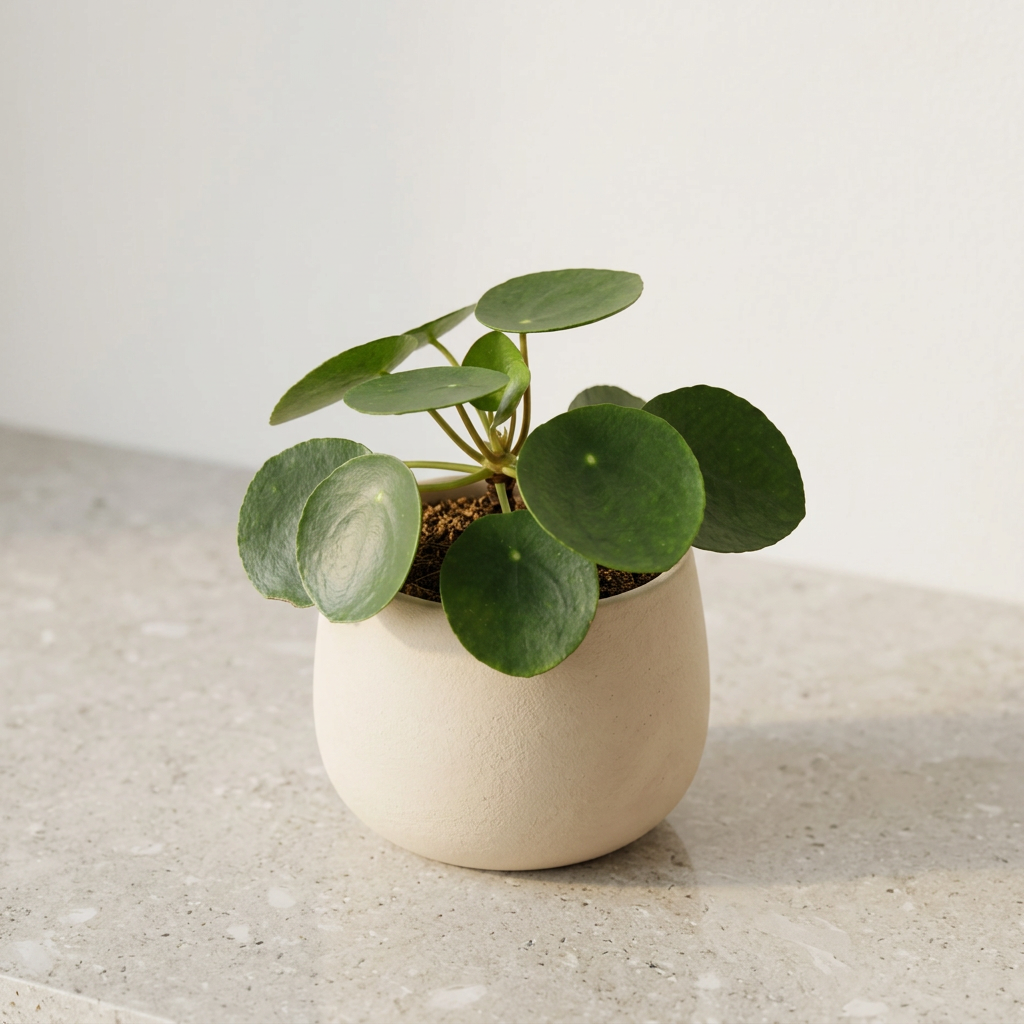
The Chinese Money Plant (Pilea peperomioides) holds each of its round, coin-flat leaves aloft on its own slender stem, creating a floating, almost architectural silhouette that looks entirely unlike any other houseplant. Native to the mountains of southwestern Yunnan, it stays compact at 8 to 12 inches, which makes it as comfortable on a desk or nightstand as it is anchoring a shelf of smaller plants.

What sets this plant apart is its generosity. Healthy Pileas push up baby plants around the base all season long, and each one can be separated and potted for a friend. That habit is how the plant traveled out of China and across Scandinavia in the 1940s, passed hand to hand until it earned the name Friendship Plant. Easy to care for, forgiving of an occasional missed watering, and completely non-toxic to cats and dogs, it is one of the simplest ways to grow your collection and share it at the same time.

Complete Care Guide

Light Requirements
  • Bright, indirect light produces flat, coin-round leaves and steady pup production
  • An east-facing window or a few feet back from a south or west window works beautifully
  • Rotate the pot a quarter turn weekly, since stems lean noticeably toward the light
  • Avoid harsh direct sun, which scorches and curls the delicate leaves
Watering Instructions
  • Water when the top 1-2 inches of soil are dry (typically every 7-10 days)
  • Slightly drooping leaves are a clear, harmless signal that it is thirsty
  • Water thoroughly until it drains, then empty the saucer completely
  • Reduce noticeably in winter, when overwatering causes most Pilea losses
Humidity & Temperature
  • Low to moderate humidity: 40-50% - standard household air suits it well
  • Temperature range: 60-75°F (15-24°C) with good air circulation
  • Keep above 50°F (10°C) and away from cold winter windowpanes
  • Protect from heating vents and drafty doorways
Potting & Fertilizing
  • Use a light, well-draining potting mix with added perlite for airflow
  • Always choose a pot with drainage holes, as the shallow roots rot easily
  • Feed monthly in spring and summer with a balanced fertilizer at half strength
  • Repot every 1-2 years in spring, or sooner if pups crowd the surface
Propagation & Baby Plant Care
  • Pups emerge from the roots at the soil surface and sometimes along the main stem
  • Separate them at 2-3 inches tall using a clean blade below the soil line
  • Pot each pup in moist, well-draining soil and keep in bright indirect light
  • Removing lower leaves as they yellow keeps the trunk tidy and sculptural

Styling Ideas for Your Chinese Money Plant

Modern Minimalist Shelves
Clean geometry against simple, uncluttered surfaces
Desks & Workspaces
Compact footprint with plenty of visual personality
Kitchen Windowsills
Bright, easy spot to watch new pups appear
Gift-Ready Groupings
Cluster the babies in small pots to share

Shipping & Potting Information

Plant Shipping Icon
Your plant ships in its current nursery pot and will need to be repotted into a decorative container of your choice. The beautiful ceramic pot shown in the product images is for styling inspiration only and is not included with your purchase. This allows you to select the perfect decorative pot that matches your home's unique style and décor.

Frequently Asked Questions

Why is it called the Friendship Plant?

The Chinese Money Plant produces baby plants around its base that are easy to separate and give away. A Norwegian missionary carried cuttings home from China in the 1940s and shared them with friends, which is how the plant spread across Scandinavia and eventually the world. For decades it was passed hand to hand rather than sold in stores.

Why is my Chinese Money Plant leaning to one side?

This plant reaches toward its light source more visibly than most. Rotate the pot a quarter turn every week or two and the stems will stay upright and evenly balanced. A pronounced lean usually means the light is also a little too dim.

What are the tiny white specks on the leaves?

Those are cystoliths, natural mineral deposits that form inside the leaf tissue. They are a normal feature of a healthy Pilea and are not pests or disease. They cannot be wiped off, which is one easy way to tell them apart from anything you would need to treat.

Is this plant safe for pets?

Yes! Chinese Money Plant (Pilea peperomioides) is non-toxic to cats and dogs, and the Pilea genus is listed as non-toxic by the ASPCA. That makes it a worry-free choice for pet-loving households, right down to the baby plants you share.

How do I separate the baby plants?

Wait until a pup is 2 to 3 inches tall, then cut it away below the soil line with a clean blade so it keeps a bit of root attached. Pot it in moist, well-draining soil and keep it in bright indirect light. Most pups establish within a few weeks and go on to make babies of their own.

View full details