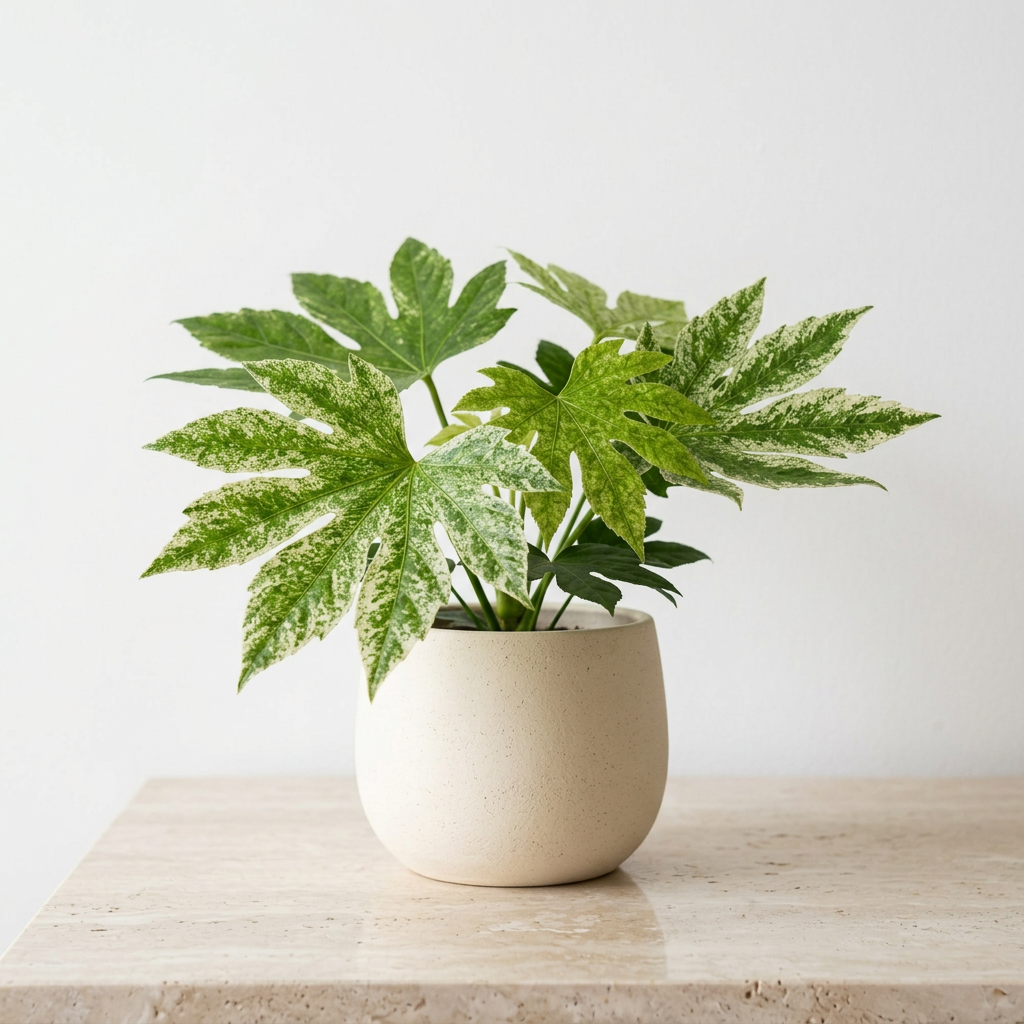


Fatsia Japonica Spider's Web - Pet Safe Non-Toxic Variegated Japanese Aralia
Fatsia Japonica Spider's Web - Pet Safe Non-Toxic Variegated Japanese Aralia
Couldn't load pickup availability
Botanical Name: Fatsia japonica 'Spider's Web'
Common Names: Spider's Web Fatsia • Japanese Aralia • Variegated Fatsia • Glossy-Leaf Paper Plant • Fatsi
The Fatsia japonica 'Spider's Web' looks like someone dusted a tropical shrub with frost. Its broad, deeply lobed leaves fan out like open hands, glossy and architectural, each one flecked and marbled in white that gathers toward the edges in a pattern closer to spun web than ordinary variegation. Indoors the leaves reach eight to twelve inches across, giving a single plant real presence in a corner that would defeat most variegated foliage.
What makes this one unusual is where it will live. Japanese Aralia is a true shade plant, comfortable in dim rooms that starve other large-leaved houseplants, and it prefers cooler temperatures than most tropicals. The ASPCA lists Fatsia japonica as non-toxic to dogs, cats, and horses, so this can be a floor-level statement plant in a house full of animals. In the Pacific Northwest it will even live outside year round in a sheltered, shaded bed.
Complete Care Guide
- Medium to bright indirect light produces the strongest white speckling
- A north or east-facing window, or well back from a brighter window, suits it perfectly
- Never direct sun, which scorches the pale variegated areas first and fastest
- Handles genuinely dim corners better than almost any large-leaved plant, with softer speckling
- Keep the soil lightly and evenly moist, watering when the top 2 inches feel dry
- This plant does not store water and will droop dramatically if it dries out too far
- Water thoroughly until it drains, then empty the saucer so roots never sit in water
- Reduce moderately in winter while keeping the root ball from going fully dry
- Moderate to high humidity: 50% or above keeps leaf edges from crisping
- Prefers cooler rooms than most houseplants: 60-70°F (15-21°C) is ideal
- Tolerates down to about 50°F (10°C) indoors, and lower still when grown outdoors
- Dislikes hot, dry forced air, so keep it away from heating vents and radiators
- Use a rich, moisture-retentive but well-draining mix with compost and perlite
- Always choose a pot with drainage holes, and go slightly heavier for stability as it fills out
- Feed monthly in spring and summer with a balanced fertilizer at half strength
- Repot every 2 years in spring, moving up one pot size
- Prune in spring to control height and encourage bushier growth from lower down
- Remove any fully green shoots, which grow faster and will crowd out the variegation
- Wipe the large leaves with a soft damp cloth, and check undersides for spider mites in dry air
- The sap can irritate sensitive skin, so wash your hands after pruning
Styling Ideas for Your Spider's Web Fatsia
Shipping & Potting Information

Frequently Asked Questions
Why does every leaf look different? ▼
That is the nature of 'Spider's Web'. The white speckling is genuinely unstable, so some leaves arrive heavily frosted, others carry a light dusting toward the edges, and the occasional leaf comes in almost solid green. Brighter indirect light generally produces stronger speckling on new growth, and no two plants are ever marked the same way.
Why is my Fatsia suddenly drooping? ▼
Dramatic drooping, sometimes called the Fatsia flop, is almost always thirst. Unlike succulents and Hoyas, this plant keeps no water reserve and collapses quickly once the soil dries too far. A thorough watering usually brings the leaves back up within hours, though repeated episodes will eventually cost you lower leaves.
Can I grow this in a low light room? ▼
Yes, and this is one of its real strengths. Fatsia japonica is a true shade plant in the wild and handles dim corners better than almost any large-leaved houseplant. The white speckling does soften in low light, so a bright indirect spot gives you the best of both, but the plant itself stays healthy in considerably less.
Is this plant safe for pets? ▼
Yes. The ASPCA lists Fatsia japonica as non-toxic to dogs, cats, and horses. You may come across UK garden sources describing it as mildly irritating, which traces back to a general caution about not eating the ornamental berries rather than a poison control classification. Separately, the sap can cause contact dermatitis on sensitive skin, so wash your hands after pruning.
Can I keep it outdoors? ▼
In USDA zones 8 through 10, yes, which includes most of the Pacific Northwest. Fatsia japonica is hardy to roughly 10°F and does beautifully in shaded, sheltered garden beds and covered patios. Site it out of harsh afternoon sun and drying winter wind, both of which damage the pale variegated areas first.