

Hoya Rope Plant Hoya Carnosa Compacta - Pet Safe Non-Toxic Curly Leaf Houseplant
Hoya Rope Plant Hoya Carnosa Compacta - Pet Safe Non-Toxic Curly Leaf Houseplant
Couldn't load pickup availability
Botanical Name: Hoya carnosa 'Compacta'
Common Names: Hoya Rope Plant • Hindu Rope Plant • Krinkle Kurl • Wax Plant • Porcelain Flower
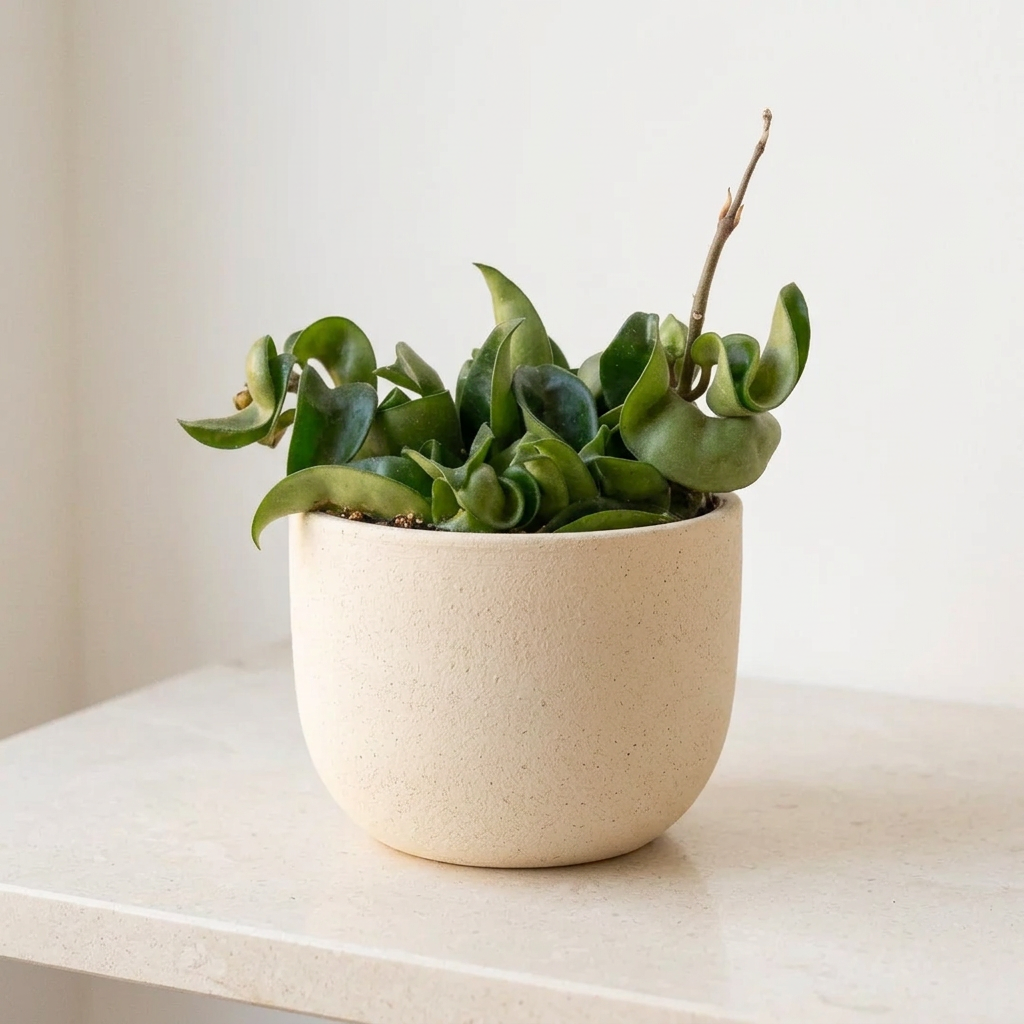
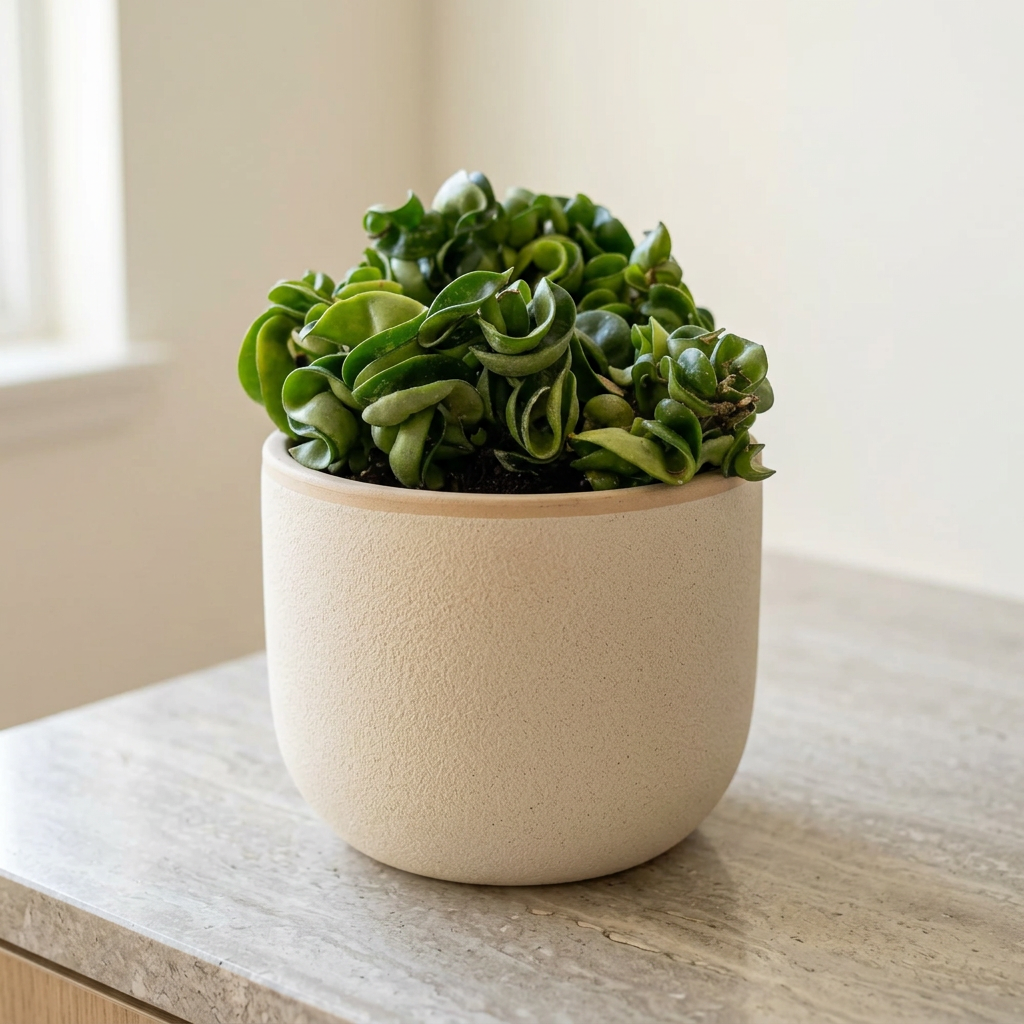
The Hoya Rope Plant (Hoya carnosa 'Compacta') looks like nothing else on a shelf. Its thick, glossy leaves curl and fold tightly along the stem until each vine resembles a braided green rope, heavy and sculptural, cascading in slow motion over the edge of a pot. It is the kind of plant people stop and ask about, and the reason it stays hard to find is simple: every one of those densely packed leaves takes time to form.
Patience is rewarded. A mature Hoya Rope Plant produces clusters of star-shaped flowers that look poured from porcelain and release a sweet fragrance in the evening. Between blooms it asks for very little, storing water in its waxy leaves and preferring to be left alone in a snug pot. Listed by the ASPCA as non-toxic to cats and dogs, it is a rare, collectible plant you can hang anywhere in the house without a second thought.
Complete Care Guide
- Bright, indirect light for at least 6 hours daily encourages growth and blooms
- An east-facing window, or a few feet from a south or west window, is ideal
- Gentle morning sun is welcome, but harsh afternoon sun bleaches the leaves
- It survives in medium light but will grow slowly and rarely flower
- Water when the soil is nearly dry throughout (typically every 2-3 weeks)
- The waxy leaves store water, so this plant handles a missed watering easily
- Water thoroughly, let it drain completely, and never leave it standing in water
- Cut back sharply in winter, when overwatering is the most common problem
- Moderate humidity: 40-60% - appreciates extra humidity but tolerates average rooms
- Temperature range: 60-80°F (15-27°C) with good air circulation
- Keep above 50°F (10°C) and away from cold winter glass
- A bright bathroom or kitchen offers the humidity it enjoys most
- Use a chunky, fast-draining mix with orchid bark, perlite, and a little potting soil
- Leave it slightly root-bound, since crowded roots encourage flowering
- Feed monthly in spring and summer with a balanced fertilizer at half strength
- Repot only every 2-3 years, moving up just one pot size
- Never remove the woody flower spur, as new blooms grow from that exact spot each year
- Leave the plant in place once buds appear, since moving it can cause bud drop
- Blooms typically arrive on mature plants in bright light, often after a few years
- Dust the leaves gently now and then to keep their waxy shine
Styling Ideas for Your Hoya Rope Plant
Shipping & Potting Information

Frequently Asked Questions
Why is there a limit of 2 plants per order? ▼
Hoya Rope Plants grow very slowly, which makes well-rooted, full specimens genuinely hard to source. We limit orders to 2 per customer so that supply stays available to as many plant lovers as possible rather than selling out to a handful of large orders.
How do I get my Hoya Rope Plant to bloom? ▼
Blooming needs three things: plant maturity, several hours of bright indirect light daily, and slightly crowded roots. Most plants flower once they are a few years established. The critical rule is to never cut off the woody flower spur after the blooms fade, because new flowers grow from that same spur year after year.
Why is my Hoya Rope Plant growing so slowly? ▼
Slow growth is completely normal here. Those tightly curled leaves take significant energy to form, so even a thriving plant may add only a few inches of vine in a season. Brighter light is the single most effective way to speed things along.
Is this plant safe for pets? ▼
Yes! Hoya carnosa is listed by the ASPCA as non-toxic to both cats and dogs, so the Hoya Rope Plant is a safe choice for pet-loving households. Worth knowing: cut stems release a milky sap that can irritate skin sensitive to latex, so wash your hands after pruning.
Why are the leaves looking wrinkled or shriveled? ▼
Wrinkled leaves point to a watering issue in either direction, so check the roots before you reach for the watering can. Dry soil with firm, pale roots means it needs a drink. Wet soil with soft or darkened roots means overwatering has damaged them and the plant can no longer take water up.