

Norfolk Island Pine Araucaria Heterophylla - Pet Safe Non-Toxic Indoor Living Christmas Tree
Norfolk Island Pine Araucaria Heterophylla - Pet Safe Non-Toxic Indoor Living Christmas Tree
Couldn't load pickup availability
Botanical Name: Araucaria heterophylla
Common Names: Norfolk Island Pine • Norfolk Pine • House Pine • Australian Pine • Star Pine • Living Christmas Tree
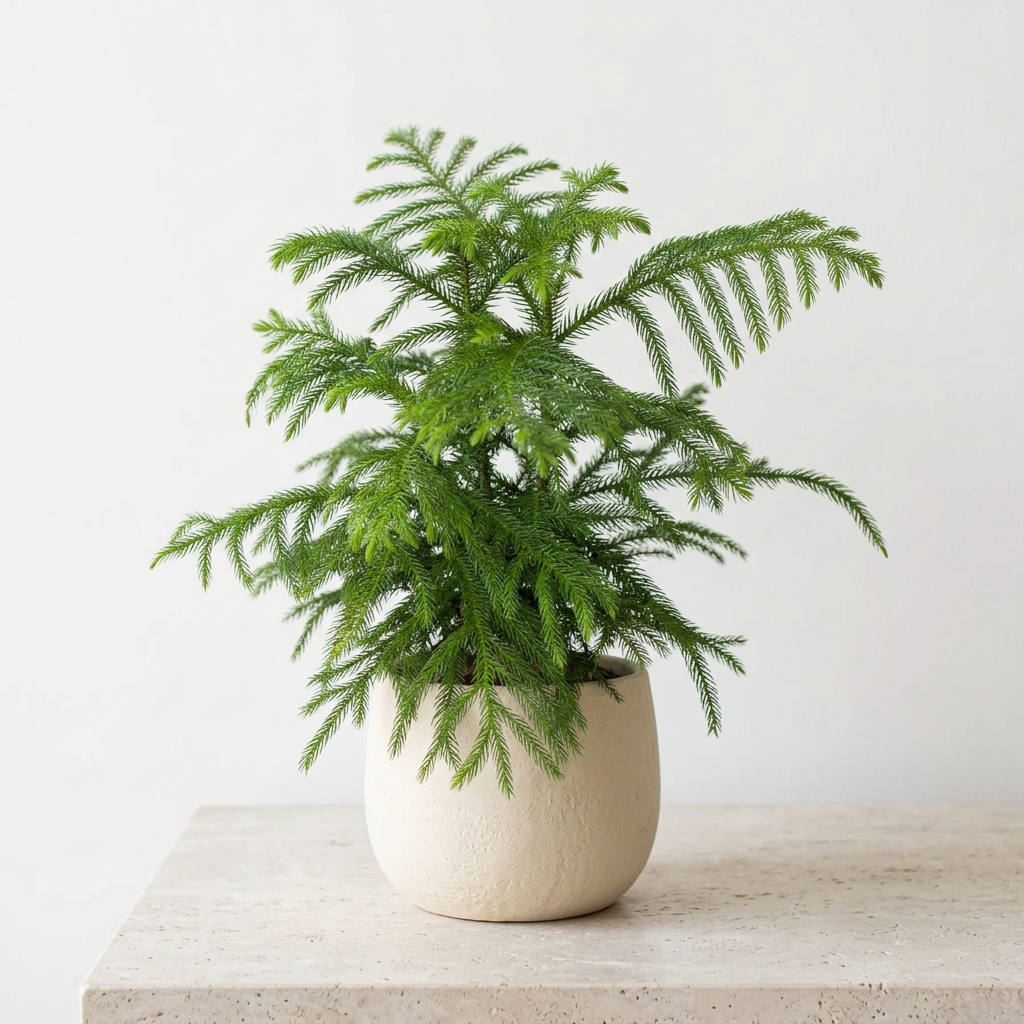
The Norfolk Island Pine (Araucaria heterophylla) grows in perfect tiers, each ring of soft, feathery branches spaced evenly around a straight central trunk like a tree drawn from memory. The needles are surprisingly gentle to the touch, nothing like a true pine, and the whole silhouette has an airy, symmetrical calm that makes it one of the most architectural plants you can bring indoors.
It is best known as a living Christmas tree, and it earns that role beautifully, but the real appeal is that it stays just as lovely in February. Native to a single small island in the South Pacific, this is a tropical evergreen that belongs to an ancient conifer family older than the flowering plants. The ASPCA lists it as non-toxic to cats, dogs, and horses, which makes it a genuinely rare thing: a full-size holiday tree that is safe to keep in a house with curious pets.
Complete Care Guide
- Bright light for at least 6 hours daily keeps the branches full and evenly tiered
- A south or west-facing window is ideal, and some gentle direct sun is welcome
- Rotate the pot a quarter turn weekly so the tree grows straight rather than leaning
- Too little light causes sparse, stretched tiers and thinning lower branches
- Keep the soil lightly and evenly moist, watering when the top inch feels dry
- Unlike succulents and Hoyas, this tree should not dry out completely between waterings
- Water thoroughly until it drains, then empty the saucer so roots never sit in water
- Reduce moderately in winter, but never let the root ball go bone dry
- Humidity of 50% or higher is the single most important factor in keeping needles green
- Run a humidifier nearby in winter, or set the pot on a pebble tray filled with water
- Temperature range: 60-75°F (15-24°C), never below 50°F (10°C)
- Keep well away from heating vents, fireplaces, and drafty doorways
- Use a well-draining, slightly acidic mix with peat or coco coir plus sand or perlite
- Choose a heavy pot with drainage holes for stability as the tree gains height
- Feed monthly in spring and summer with a balanced fertilizer at half strength
- Repot every 2-3 years in spring, keeping the pot modest to naturally limit size
- Never cut the central leader, as topping the tree permanently ends its upward growth and symmetry
- Trim only branches that are fully brown or damaged, since lost branches do not regrow
- Decorate with lightweight ornaments and cool LED lights only
- Avoid flocking, artificial snow, and any preservative or shine sprays
Styling Ideas for Your Norfolk Island Pine
Shipping & Potting Information

Frequently Asked Questions
Is the Norfolk Island Pine safe for pets? ▼
Yes. The ASPCA lists Araucaria heterophylla as non-toxic to dogs, cats, and horses. You will find older articles online calling it mildly toxic, which traces back to an outdated classification that has since been corrected, so it is worth checking the ASPCA listing directly if you see conflicting claims. As with any plant, a pet that eats a large quantity of foliage may get a mild upset stomach simply because the material is hard to digest.
Why are the lower branches turning brown and dropping? ▼
Browning lower branches almost always mean the air is too dry or the soil was allowed to dry out too far. These trees want humidity around 50 percent and soil that stays lightly moist. This one matters more than most care issues, because branches that drop do not grow back, so catching it early protects the tree's shape permanently.
Can I trim the top to keep it short? ▼
No, and this is the most common mistake people make with this tree. Cutting the central leader permanently stops upward growth, and the tree cannot regain its symmetrical shape afterward. Control the size by keeping it in a modest pot instead, and prune only branches that are dead or damaged.
Is this a real pine tree? ▼
No. Despite the name, it is not a pine at all. Araucaria heterophylla belongs to the Araucariaceae family, an ancient conifer lineage that predates flowering plants, and it is native to Norfolk Island in the South Pacific rather than any cold northern forest. That tropical origin is exactly why it needs warmth and humidity indoors instead of the cold a true pine would want.
Can I decorate it as a Christmas tree? ▼
Yes, with a light touch. Use lightweight ornaments and cool LED string lights only, since the branches are soft and flexible and any heat source dries the needles quickly. Skip flocking, artificial snow, and preservative sprays entirely. Decorated gently, the same tree can anchor your holidays for many years running.