

The best low light plants for homes with cats and dogs are calatheas, prayer plants, parlor palm, bird's nest fern and peperomias. All handle dim rooms and are listed as non-toxic to cats and dogs by the ASPCA. The two most recommended low light plants, pothos and snake plant, are both toxic to pets.

What "low light" really means
Low light doesn't mean no light. It means a spot 6 to 10 feet from a window, a north-facing room, or a window behind sheer curtains. A simple test: if you can comfortably read a book there during the day without turning on a lamp, a low light plant will be happy. A room with no windows at all needs a grow light.
Skip these low light favorites. Pothos, snake plant, ZZ plant, peace lily and Chinese evergreen appear on nearly every low light list, and all are listed as toxic to cats, dogs or both by the ASPCA.
8 low light plants that are safe for cats and dogs
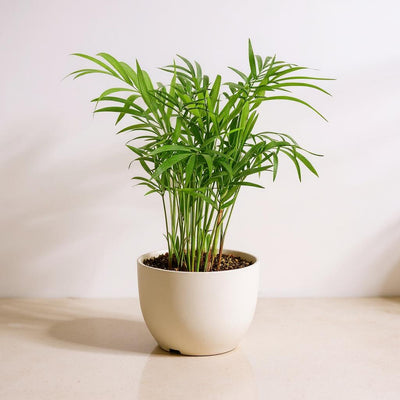
1. Parlor palm (Chamaedorea elegans)
The best low light plant for most people. It grows naturally on shady forest floors, so a dim room doesn't bother it. It grows slowly, stays a manageable size, and brings a soft, tropical look. It's a true palm and is not the toxic sago palm. Shop parlor palm · parlor palm care guide
2. Calathea (Calathea / Goeppertia)
Calatheas actually prefer indirect light, because direct sun fades their painted leaves. The ASPCA lists the Calathea genus as non-toxic to cats and dogs. Rattlesnake calathea is the most forgiving; orbifolia and medallion are showier but want more humidity. Use filtered water to prevent crispy edges. Shop calatheas · are calatheas safe for cats?
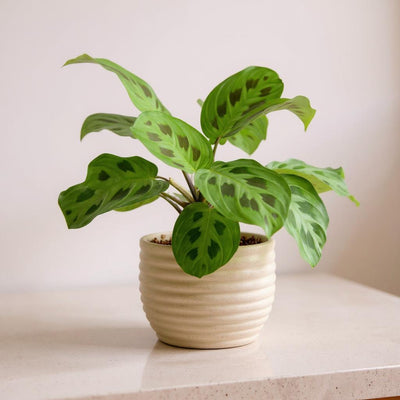
3. Prayer plant (Maranta leuconeura)
Patterned leaves that fold up every evening. Prayer plants are easier than most calatheas and grow low and wide, which makes them hard for pets to knock over. Try the classic green, the red prayer plant or the lemon lime. Shop prayer plant
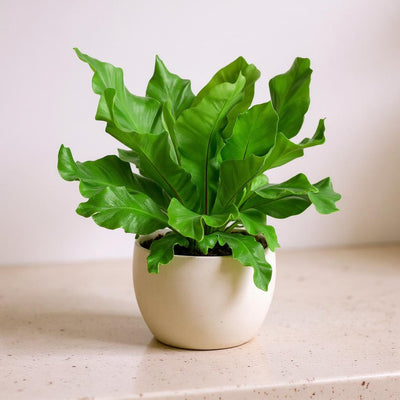
4. Bird's nest fern (Asplenium nidus)
The easiest fern for low light. Its broad, glossy fronds handle normal household humidity much better than lacy ferns, and it doesn't shed. Don't confuse it with the "asparagus fern," which isn't a true fern and is toxic. Shop bird's nest fern
5. Baby rubber plant (Peperomia obtusifolia)
Thick, glossy leaves store water, so it handles missed waterings and lower light. The ASPCA lists it as non-toxic by name. Note: it's completely different from the toxic rubber plant (Ficus elastica). Shop baby rubber plant
6. Ripple peperomia (Peperomia caperata)
Crinkled, textured leaves in a compact rosette, in green, deep red or silvery frost. Perfect for a shelf or desk in a dimmer room. Shop Ripple Red · all peperomias
7. Spider plant (Chlorophytum comosum)
Handles a wider range of light than almost any houseplant. It grows fuller and paler in low light and keeps producing babies. Cats love to chew the leaves, so hang it up. Shop spider plant
8. Cast iron plant (Aspidistra elatior)
The toughest low light plant there is. It handles deep shade, dry air and neglect, and it's listed as non-toxic to cats and dogs. A great pick for a hallway or a corner far from any window.
Quick comparison
| Plant | Lowest light | Care | Best for |
|---|---|---|---|
| Parlor palm | Low | Easy | Floor plant, dim corners |
| Cast iron plant | Very low | Very easy | Hallways, deep shade |
| Calathea | Low to medium | Moderate | Bold pattern and color |
| Prayer plant | Low to medium | Easy | Tables, low shelves |
| Bird's nest fern | Low to medium | Easy | Bathrooms, any room |
| Baby rubber plant | Low to medium | Very easy | Desks, beginners |
| Ripple peperomia | Medium | Easy | Small shelves |
| Spider plant | Low | Very easy | Hanging baskets |
Low light care tips
- Water less. Plants in low light use water slowly. A calathea that needs water every 5 days in a bright spot may need it every 10 to 12 days in a dim one. Always check the soil first.
- Rotate the pot a quarter turn every week or two so it doesn't lean toward the window.
- Dust the leaves. Dusty leaves absorb less of the little light they get. Wipe them with a damp cloth once a month.
- Skip the fertilizer in winter. Low light plants grow slowly and need very little feeding.
- Empty saucers after watering. Standing water tempts pets and can rot roots.
FAQ
What is the easiest low light plant that's safe for pets?
Parlor palm or baby rubber plant. Both handle dim rooms, forgive imperfect watering, and are listed as non-toxic to cats and dogs.
Can a plant live in a room with no windows?
Not long-term without a grow light. Low light plants still need some daylight. An inexpensive LED grow light on a timer for 10 to 12 hours a day makes a windowless room work.
Are pothos and snake plants safe for pets?
No. They're the two most recommended low light plants, but the ASPCA lists both as toxic to cats and dogs.
Which low light plant is best for a cat that chews?
All of these are safe if chewed, but tough-leaved plants like baby rubber plant, bird's nest fern and cast iron plant hold up best. Hang spider plants out of reach, since cats find them irresistible.
Shop low light plants that are safe for your pets
Every plant we sell is listed as non-toxic to cats and dogs. Free shipping and a 30-day plant health guarantee.
Shop low light plantsWritten and reviewed by Nikki, founder of Root & Reach Botanicals. Last updated September 2026. Source: ASPCA Animal Poison Control Center plant lists for cats and dogs. This article is general information, not veterinary advice.